
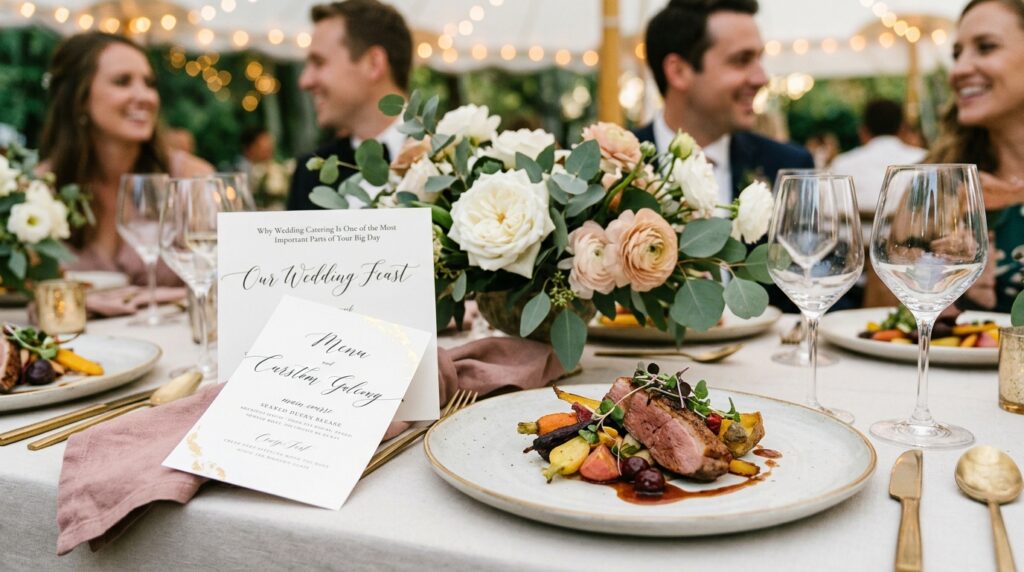
A successful reception menu balances your budget, guest preferences, venue logistics, dietary accommodations, and seasonal ingredients while creating a memorable dining experience. Whether you choose a plated dinner, buffet, family-style meal, or interactive food stations, thoughtful planning ensures guests enjoy exceptional food that complements your celebration.
This comprehensive guide explains how to choose the best catering style, build a balanced menu, estimate food quantities, avoid common mistakes, and create an unforgettable wedding dining experience.
How do you create the perfect wedding reception menu?
The perfect wedding reception menu begins with your guest list, wedding style, budget, and venue requirements. Most couples choose between plated dinners, buffets, family-style meals, or food stations while offering multiple entrée options, accommodating dietary restrictions, serving seasonal ingredients, and working closely with an experienced wedding caterer. A balanced menu paired with thoughtful beverage selections creates an enjoyable dining experience guests will remember long after the celebration.
Why Wedding Catering Is One of the Most Important Parts of Your Big Day
Many couples spend months choosing the perfect venue, selecting elegant décor, and finding the right photographer. Yet when guests reflect on a wedding years later, one detail consistently stands out: the food.
A beautifully prepared meal does more than satisfy hunger. It sets the tone for the reception, encourages conversation, creates moments of connection, and leaves a lasting impression that often becomes one of the most talked-about parts of the celebration.
Exceptional catering transforms a reception into an experience. Poor catering, on the other hand, can overshadow even the most stunning venue or carefully planned décor.
Professional wedding catering contributes to:
- Guest comfort and satisfaction
- A smooth reception timeline
- Memorable dining experiences
- Elegant presentation
- Personalized hospitality
- Stress-free event coordination
- Positive guest reviews and recommendations
Rather than treating food as another wedding expense, think of catering as one of the biggest contributors to your guests’ overall experience.
Wedding Catering Timeline: When Should You Start Planning?
One of the biggest mistakes couples make is waiting too long to book their caterer. Popular venues and catering teams often fill their calendars 9 to 18 months in advance, especially during peak wedding seasons.
Planning ahead gives you more flexibility, better pricing, and access to your preferred vendors.
| Timeline | Recommended Action |
|---|---|
| 12–18 Months Before | Research venues and catering companies |
| 10–12 Months Before | Schedule tastings and request proposals |
| 8–10 Months Before | Book your caterer and finalize service style |
| 4–6 Months Before | Refine menu selections and beverage options |
| 2–3 Months Before | Confirm guest count and dietary requirements |
| 2–4 Weeks Before | Finalize seating chart and meal counts |
| Wedding Week | Confirm delivery times, setup schedule, and service timeline |
Planner’s Tip: Booking early doesn’t just secure your preferred caterer. It often provides more flexibility for menu customization and scheduling tastings at convenient times.
Start With Your Wedding Vision
Before choosing appetizers, entrées, or desserts, define the experience you want your guests to have.
Your menu should reflect the overall personality of your celebration rather than simply following current food trends.
Ask yourself:
- Is your wedding formal, semi-formal, or casual?
- Will your reception take place indoors or outdoors?
- Are you planning a daytime brunch, afternoon luncheon, or evening celebration?
- Do you want a traditional reception or a more interactive dining experience?
- Are there family recipes or cultural traditions you’d like to include?
- What feeling do you want guests to remember when they leave?
Answering these questions first makes every catering decision easier.
Matching Your Catering Style to Your Wedding Theme
Your dining experience should complement the atmosphere of your wedding.
| Wedding Style | Recommended Catering Option |
|---|---|
| Black-Tie Ballroom | Multi-course plated dinner |
| Rustic Barn Wedding | Family-style service |
| Garden Wedding | Buffet with seasonal dishes |
| Beach Wedding | Interactive food stations |
| Luxury Reception | Plated service with cocktail hour |
| Modern Celebration | Chef-attended stations and grazing tables |
Choosing a catering style that aligns with your venue and theme creates a more cohesive guest experience.
Wedding Catering Checklist Before You Book
Before signing a contract, make sure you can confidently answer these questions:
✔ Does the caterer have experience with weddings of your size?
✔ Can they accommodate dietary restrictions and food allergies?
✔ What is included in the quoted price?
✔ Are staffing, linens, china, and cleanup included?
✔ Is a tasting available before signing the final agreement?
✔ What is the backup plan for outdoor events?
✔ Are gratuities and service charges already included?
✔ How many weddings do they cater on the same day?
✔ Do they coordinate directly with the venue?
✔ Can they customize the menu to match your vision?
This checklist helps avoid misunderstandings later in the planning process.
Expert Insight: Think Beyond the Plate
Many couples focus almost entirely on what will be served, but the overall dining experience depends on much more than the menu.
Consider how food service affects:
- Guest flow between the ceremony and reception
- Wait times before dinner
- Beverage availability during cocktail hour
- Seating comfort
- Dessert timing
- Late-night snack service
- Staff professionalism
- Coordination with speeches, dances, and entertainment
A well-planned catering experience feels seamless because every detail works together behind the scenes.
Wedding Catering Trends for 2026
Couples are increasingly looking for personalized dining experiences rather than traditional one-size-fits-all menus.
Some of the fastest-growing trends include:
- Interactive chef stations
- Farm-to-table ingredients
- Custom signature cocktails
- Mini dessert flights
- Late-night comfort food bars
- Grazing tables
- Global fusion cuisine
- Locally sourced seasonal menus
- Mocktail bars
- Sustainable catering with reduced food waste
Incorporating one or two modern trends can make your reception feel current without sacrificing timeless elegance.
Featured Snippet
What makes wedding catering successful?
Successful wedding catering combines thoughtful menu planning, professional service, accurate guest counts, seasonal ingredients, dietary accommodations, and a catering style that matches the wedding’s theme and budget. Working with an experienced caterer and planning well in advance helps create a seamless dining experience that guests will remember.
Understanding the Different Wedding Catering Styles
One of the biggest decisions you’ll make is how your meal will be served. The right catering style influences your budget, guest experience, event timeline, staffing requirements, and the overall atmosphere of your reception.
There isn’t a single “best” option. Instead, the ideal choice depends on your wedding size, venue layout, guest demographics, and personal preferences.
Let’s compare the most popular wedding catering styles so you can make an informed decision.
Wedding Catering Style Comparison
| Catering Style | Best For | Budget | Guest Experience | Formality |
|---|---|---|---|---|
| Plated Dinner | Luxury & Formal Weddings | $$$$ | Excellent | ⭐⭐⭐⭐⭐ |
| Buffet | Medium to Large Weddings | $$$ | Very Good | ⭐⭐⭐ |
| Family Style | Rustic & Intimate Weddings | $$$ | Excellent | ⭐⭐⭐⭐ |
| Food Stations | Modern Weddings | $$$$ | Outstanding | ⭐⭐⭐⭐ |
| Cocktail Reception | Small Celebrations | $$ | Social | ⭐⭐⭐ |
| Brunch Reception | Morning Weddings | $$ | Relaxed | ⭐⭐⭐ |
Expert Tip: Your catering style should complement your venue, timeline, and guest expectations rather than simply following current trends.
1. Plated Dinner Service
A plated dinner remains the gold standard for elegant wedding receptions.
Guests stay seated while each course is professionally served, creating a polished and seamless dining experience.
This service style is commonly chosen for ballroom weddings, black-tie receptions, luxury venues, and traditional celebrations.
Advantages
✔ Elegant presentation
✔ Smooth reception timeline
✔ Professional table service
✔ Controlled portion sizes
✔ Minimal guest movement
✔ Excellent for formal speeches and entertainment
Considerations
- Higher staffing costs
- Advance entrée selections are often required
- Less flexibility for guests
- Longer meal service compared to buffets
Best For
- Luxury weddings
- Ballroom receptions
- Hotel weddings
- Country club weddings
- Formal evening celebrations
Planner’s Tip
Offer two or three entrée options rather than one. This accommodates different preferences without making service unnecessarily complicated.
2. Buffet Wedding Catering
Buffets remain one of the most popular choices because they provide flexibility and variety.
Guests can select their preferred dishes and portion sizes while exploring multiple flavors.
When designed well, buffets encourage conversation and satisfy a wide range of tastes.
Advantages
✔ Greater menu variety
✔ Flexible portions
✔ Easier dietary accommodations
✔ Reduced food waste
✔ More affordable than plated service in many situations
Considerations
- Buffet lines may form during peak serving times.
- Requires additional floor space.
- Food presentation must be maintained throughout service.
Best For
- Garden weddings
- Barn weddings
- Outdoor receptions
- Medium and large guest lists
- Casual celebrations
Expert Catering Tip
Use multiple buffet stations instead of one long buffet line. This reduces waiting time and keeps guests moving efficiently.
3. Family-Style Dining
Family-style service combines the elegance of a seated dinner with the warmth of sharing food around the table.
Large serving platters are placed on each table, allowing guests to serve themselves.
Advantages
✔ Encourages conversation
✔ Creates a welcoming atmosphere
✔ Eliminates buffet lines
✔ Guests enjoy multiple dishes
Considerations
- Requires larger tables
- Slightly higher food quantities
- Additional serving platters
Best For
- Rustic weddings
- Vineyard venues
- Family-focused celebrations
- Smaller guest counts
Why Guests Love It
Sharing food naturally encourages interaction and creates memorable moments between family members and friends.
4. Interactive Food Stations
Food stations have become one of the fastest-growing wedding catering trends because they transform dinner into an experience.
Instead of one buffet, guests visit several chef-attended stations offering freshly prepared specialties.
Popular Station Ideas
Pasta Station
Fresh pasta with customized sauces and toppings.
Taco Bar
Guests build tacos with grilled meats, seafood, vegetables, and fresh toppings.
Carving Station
Freshly carved beef, turkey, ham, or prime rib.
Seafood Station
Oysters, shrimp cocktail, smoked salmon, crab cakes.
International Station
Mediterranean, Mexican, Italian, Asian, or Indian cuisine.
Dessert Station
Mini pastries
Chocolate fountains
Macarons
Cheesecake bites
Fresh fruit
Advantages
✔ Interactive
✔ Personalized
✔ Great photo opportunities
✔ Encourages mingling
✔ Highly memorable
Considerations
- Higher staffing requirements
- Larger venue needed
- More coordination
Trending in 2026
Chef-attended live cooking stations continue to outperform traditional buffets in guest satisfaction because they combine entertainment with freshly prepared food.
Which Catering Style Fits Your Wedding?
| If You Want… | Choose… |
|---|---|
| Elegant Luxury | Plated Dinner |
| Maximum Variety | Buffet |
| Warm Family Atmosphere | Family Style |
| Interactive Experience | Food Stations |
| Budget Friendly | Buffet |
| Modern Reception | Food Stations |
How Many Food Options Should You Offer?
One of the most common planning mistakes is offering either too many or too few menu choices.
A carefully curated menu is almost always more successful than an overwhelming selection.
Recommended Structure
Cocktail Hour
6 to 8 appetizers
Entrée Choices
2 to 3 proteins
1 vegetarian or vegan entrée
Side Dishes
2 vegetables
1 starch
Fresh bread
Seasonal salad
Desserts
Wedding cake
2 to 4 additional desserts
Coffee & tea station
Build a Balanced Wedding Menu
A memorable reception menu is about more than selecting favorite foods. The meal should feel cohesive from the first appetizer to the final dessert.
Cocktail Hour
The cocktail hour sets the tone for the evening.
Aim for a mix of:
Cold Hors d’oeuvres
- Caprese skewers
- Smoked salmon bites
- Bruschetta
- Cheese boards
- Fresh fruit displays
Hot Hors d’oeuvres
- Mini crab cakes
- Stuffed mushrooms
- Bacon-wrapped scallops
- Chicken satay
- Mini sliders
Vegetarian Options
- Spinach pastries
- Vegetable spring rolls
- Roasted vegetable crostini
- Falafel bites
Expert Advice
Avoid serving overly filling appetizers that leave guests too full for dinner. Focus on variety, freshness, and bite-sized portions.
Choosing the Perfect Main Course
Your entrée should satisfy a broad range of guests while complementing your overall wedding style.
Most receptions perform best with:
- Chicken
- Beef
- Seafood
- Vegetarian entrée
This combination covers the majority of guest preferences without creating unnecessary complexity.
Entrée Comparison Guide
| Entrée | Popularity | Cost | Best For |
|---|---|---|---|
| Chicken | ⭐⭐⭐⭐⭐ | $$ | Almost Every Wedding |
| Beef | ⭐⭐⭐⭐⭐ | $$$$ | Luxury Receptions |
| Fish | ⭐⭐⭐⭐ | $$$ | Coastal Venues |
| Vegetarian | ⭐⭐⭐⭐ | $$ | Dietary Variety |
Side Dish Planning
Excellent side dishes provide balance rather than competing with the main course.
Popular choices include:
- Garlic mashed potatoes
- Roasted seasonal vegetables
- Wild rice pilaf
- Truffle potatoes
- Caesar salad
- Mixed greens
- Artisan breads
A combination of lighter and richer sides creates a more satisfying meal.
Wedding Menu Formula Used by Professional Caterers
A simple framework used by many experienced catering teams looks like this:
✔ Welcome Drink
↓
✔ 6–8 Cocktail Hour Bites
↓
✔ Fresh Salad
↓
✔ Main Course (2–3 Entrée Choices)
↓
✔ Two Side Dishes
↓
✔ Wedding Cake
↓
✔ Dessert Display
↓
✔ Coffee & Tea
↓
✔ Late-Night Snack (Optional)
This sequence keeps the reception flowing naturally while giving guests multiple memorable food experiences.
Featured Snippet
What is the best catering style for a wedding?
The best wedding catering style depends on your guest count, budget, venue, and desired atmosphere. Plated dinners offer an elegant, formal experience, buffets provide flexibility and variety, family-style service encourages interaction, and food stations create an engaging, modern dining experience. Couples should choose the style that best matches their wedding vision and guest expectations.
Expert Planner Insight
Many couples choose a catering style based only on cost, but experienced planners evaluate the entire guest experience. A slightly higher investment in professional service, efficient food flow, and thoughtful menu planning often creates a far more memorable reception than simply expanding the number of menu items.
Accommodating Dietary Restrictions Without Sacrificing Flavor
Modern weddings bring together guests from different backgrounds, cultures, and dietary preferences. A thoughtfully planned menu ensures everyone feels welcomed and included.
Instead of treating dietary accommodations as an afterthought, make them an integral part of your catering plan.
Common Dietary Requirements
- Vegetarian
- Vegan
- Gluten-Free
- Dairy-Free
- Nut-Free
- Halal
- Kosher
- Low-Sodium Options
- Diabetic-Friendly Choices (where appropriate)
Expert Tip: Ask guests about dietary restrictions when collecting RSVPs. This gives your caterer enough time to prepare suitable alternatives without affecting service.
Wedding Dietary Planning Checklist
| Requirement | Recommended Action |
|---|---|
| Vegetarian | Offer a dedicated entrée, not just side dishes |
| Vegan | Include at least one complete plant-based meal |
| Gluten-Free | Prevent cross-contamination during preparation |
| Nut Allergies | Clearly label desserts and appetizers |
| Dairy-Free | Offer dairy-free sauces and desserts |
| Children’s Meals | Prepare simpler, familiar options |
| Religious Requirements | Discuss menu customization with your caterer early |
How to Build a Balanced Wedding Reception Menu
A memorable wedding menu follows a natural progression that keeps guests satisfied without overwhelming them.
Cocktail Hour
Offer 6–8 appetizers with a mix of:
- Hot bites
- Cold bites
- Vegetarian options
- Seafood (optional)
- Premium passed hors d’oeuvres
Salad Course
Choose light, refreshing options such as:
- Mixed Greens
- Caesar Salad
- Strawberry Spinach Salad
- Mediterranean Salad
- Burrata Salad
Main Course
Offer:
- Chicken
- Beef or Seafood
- Vegetarian/Vegan Option
Three entrée choices generally provide enough variety without complicating service.
Side Dishes
Balance rich entrées with lighter accompaniments.
Examples:
- Garlic Mashed Potatoes
- Herb Rice Pilaf
- Roasted Seasonal Vegetables
- Grilled Asparagus
- Buttered Green Beans
- Artisan Bread
Dessert
A complete dessert experience may include:
- Wedding Cake
- Mini Cheesecakes
- Macarons
- Chocolate Mousse
- Fresh Fruit
- Coffee & Tea Bar
Wedding Catering Budget Breakdown
Food and beverage costs usually represent one of the largest portions of a wedding budget. Understanding where your money goes helps you prioritize what matters most.
Typical Catering Cost Distribution
| Category | Approximate Share |
|---|---|
| Food | 50–60% |
| Beverage Service | 15–20% |
| Staffing | 10–15% |
| Rentals (China, Linens, Flatware) | 5–10% |
| Service Charges & Gratuities | 5–10% |
Budget Insight: The lowest quote isn’t always the best value. Compare what’s included, such as staffing, rentals, setup, cleanup, and service fees, before making a decision.
Wedding Catering Cost Per Guest Guide
| Catering Style | Typical Investment Level |
|---|---|
| Buffet | $$ |
| Family Style | $$$ |
| Plated Dinner | $$$$ |
| Food Stations | $$$$ |
| Cocktail Reception | $$–$$$ |
Actual pricing varies depending on location, menu complexity, service level, and guest count.
Hidden Wedding Catering Costs Many Couples Forget
Even carefully planned budgets can overlook additional catering expenses.
Common hidden costs include:
- Cake cutting fees
- Corkage fees
- Champagne toast service
- Vendor meals
- Overtime staffing
- Equipment rentals
- Ice delivery
- Coffee station upgrades
- Specialty linens
- Travel fees
- Outdoor kitchen setup
- Cleanup charges
Ask for an itemized proposal so there are no surprises later.
Seasonal Wedding Menu Guide
Using seasonal ingredients often improves freshness, flavor, and overall value.
Spring Weddings
Recommended Menu
Appetizers
- Asparagus Tartlets
- Caprese Skewers
- Shrimp Cocktail
Entrées
- Lemon Herb Chicken
- Grilled Salmon
Sides
- Spring Vegetables
- Wild Rice
Desserts
- Lemon Cake
- Strawberry Shortcake
Summer Weddings
Recommended Menu
Appetizers
- Fresh Fruit Displays
- Bruschetta
- Chilled Gazpacho Shooters
Entrées
- Grilled Chicken
- Filet Mignon
- Mahi-Mahi
Desserts
- Berry Tart
- Gelato Bar
Fall Weddings
Recommended Menu
Entrées
- Herb-Roasted Turkey
- Braised Short Ribs
Sides
- Roasted Root Vegetables
- Sweet Potato Mash
Desserts
- Apple Crisp
- Pumpkin Cheesecake
Winter Weddings
Recommended Menu
Entrées
- Beef Tenderloin
- Roasted Chicken
Sides
- Creamy Risotto
- Garlic Potatoes
Desserts
- Chocolate Cake
- Bread Pudding
Beverage Planning Guide
A great beverage menu complements your food while offering options for every guest.
Recommended Beverage Station
Alcoholic
- Signature Cocktail
- Champagne
- White Wine
- Red Wine
- Craft Beer
Non-Alcoholic
- Sparkling Water
- Lemonade
- Iced Tea
- Mocktails
- Coffee
- Espresso
- Herbal Tea
Offering thoughtful non-alcoholic choices helps every guest feel included.
Signature Cocktails vs Full Bar
| Option | Best For |
|---|---|
| Signature Cocktails | Budget-conscious weddings with a personalized touch |
| Beer & Wine | Elegant, simplified beverage service |
| Full Open Bar | Luxury receptions |
| Cash Bar | Budget-limited events (less common for weddings) |
Wedding Cake vs Dessert Bar
Many couples now combine a traditional cake with a broader dessert experience.
| Wedding Cake | Dessert Bar |
|---|---|
| Traditional centerpiece | Greater variety |
| Ideal for cake cutting | Guests can sample multiple desserts |
| Formal presentation | Interactive experience |
| Classic wedding photos | Appeals to diverse preferences |
The two options complement each other rather than compete.
Should You Offer Late-Night Snacks?
If your reception extends well into the evening, late-night snacks can be a welcome surprise.
Popular options include:
- Mini Burgers
- Chicken Sliders
- French Fries
- Gourmet Pizza
- Soft Pretzels
- Donuts
- Tacos
- Popcorn Station
Late-night bites help maintain energy on the dance floor and are often one of the most talked-about details after the wedding.
Kids’ Meals
Children often prefer familiar foods over gourmet selections.
Popular choices include:
- Chicken Tenders
- Mac and Cheese
- Mini Burgers
- Pasta with Butter
- Fruit Cups
- French Fries
Providing a dedicated children’s menu can improve the dining experience for families.
Don’t Forget Vendor Meals
Photographers, videographers, DJs, planners, and entertainment teams are usually present throughout the reception.
Confirm with your vendors whether meals are required, and include them in your final catering count to avoid last-minute issues.
Featured Snippet
How much food should you order for a wedding?
The right amount of food depends on your guest count, reception length, catering style, and event schedule. Experienced wedding caterers calculate portions based on confirmed RSVPs, menu selections, and service style to ensure guests are well served while minimizing unnecessary waste.
Expert Wedding Planner Insight
One of the most common regrets couples have after their wedding isn’t choosing the “wrong” entrée. It’s realizing they didn’t leave enough room in the budget for guest experience enhancements like signature cocktails, upgraded desserts, or a late-night snack station.
Guests rarely remember whether there were six appetizer options or eight. They remember whether the food was served on time, tasted fresh, and fit the overall atmosphere of the celebration.
Wedding Catering Planning Checklist
Before your wedding day, confirm that every catering detail has been finalized.
12–9 Months Before
- Research wedding caterers
- Schedule tastings
- Compare proposals
- Establish catering budget
- Confirm venue catering policies
9–6 Months Before
- Reserve your caterer
- Choose your service style
- Discuss dietary accommodations
- Select preliminary menu
6–3 Months Before
- Finalize entrée options
- Select bar package
- Plan cocktail hour
- Choose desserts
- Confirm rental needs
3–1 Month Before
- Final RSVP count
- Vendor meal count
- Seating chart
- Service timeline
- Floor plan review
Wedding Week
- Confirm arrival times
- Confirm menu
- Review weather backup plan
- Final payment
- Emergency contact list
15 Questions to Ask Before Hiring a Wedding Caterer
Choosing a caterer is one of the biggest decisions you’ll make. Ask these questions before signing a contract:
- How many weddings do you cater each year?
- Have you worked at our venue before?
- Do you provide tastings?
- What is included in your pricing?
- Can the menu be customized?
- How do you handle food allergies?
- Do you accommodate vegan, vegetarian, gluten-free, and other dietary requests?
- How many staff members will be on-site?
- What happens if guest counts change?
- Are gratuities included?
- Who will manage the event on the wedding day?
- Do you provide linens, china, glassware, and flatware?
- What is your cancellation or postponement policy?
- Are there overtime charges?
- Can you provide references from recent weddings?
Sample Wedding Reception Timeline
| Time | Activity |
|---|---|
| 4:30 PM | Ceremony Ends |
| 5:00 PM | Cocktail Hour Begins |
| 6:00 PM | Guests Seated |
| 6:15 PM | Welcome Toast |
| 6:30 PM | Dinner Service |
| 7:30 PM | Speeches |
| 8:00 PM | First Dance |
| 8:30 PM | Cake Cutting |
| 9:00 PM | Dessert & Coffee |
| 10:00 PM | Late-Night Snacks |
| 11:00 PM | Grand Exit |
A well-coordinated timeline helps ensure food is served at the ideal temperature while keeping guests engaged throughout the evening.
Wedding Menu Planning Worksheet
Cocktail Hour
□ Welcome Drink
□ Signature Cocktail
□ 6–8 Appetizers
Dinner
□ Salad
□ Chicken Entrée
□ Beef or Seafood Entrée
□ Vegetarian/Vegan Entrée
□ Two Side Dishes
□ Bread Service
Dessert
□ Wedding Cake
□ Dessert Display
□ Coffee Station
Late-Night Snacks (Optional)
□ Sliders
□ Pizza
□ Fries
□ Donuts
□ Pretzels
1. When should you book a wedding caterer?
Ideally, book your caterer 9 to 12 months before your wedding. Popular caterers often fill their calendars well in advance, especially during peak wedding seasons.
2. How much food should be served at a wedding?
The amount depends on your guest count, service style, and reception schedule. An experienced caterer will calculate portions to minimize waste while ensuring every guest is well served.
3. What is the most popular wedding catering style?
Plated dinners and buffets remain the most common choices, while food stations continue to grow in popularity for modern weddings.
4. Is a buffet cheaper than a plated dinner?
In many cases, buffets can be more cost-effective due to reduced staffing needs, but overall costs depend on menu selections, venue requirements, and guest count.
5. Should you offer vegetarian options?
Yes. Including vegetarian or vegan entrées helps accommodate a wider range of dietary preferences and ensures every guest has an enjoyable dining experience.
6. How many appetizers should be served during cocktail hour?
Most weddings offer 6–8 appetizer selections, combining hot, cold, vegetarian, and premium options.
7. Do wedding caterers accommodate food allergies?
Professional caterers typically provide customized options for allergies and dietary restrictions when informed in advance.
8. What drinks should be available at a wedding?
A balanced beverage menu usually includes water, soft drinks, mocktails, beer, wine, signature cocktails, coffee, and tea.
9. How many entrée options should guests have?
Two to three entrée choices plus a vegetarian or vegan option generally provide sufficient variety.
10. What is included in a wedding catering package?
Packages may include food preparation, service staff, tableware, linens, bar service, setup, cleanup, and rentals, though inclusions vary by caterer.
11. Should you provide vendor meals?
Yes. Photographers, videographers, planners, DJs, and other vendors working throughout the reception typically require meals.
12. Are tasting sessions important?
Absolutely. Tastings allow couples to evaluate food quality, presentation, and menu options before making final selections.
13. How can couples reduce wedding catering costs?
Choosing seasonal ingredients, simplifying menus, limiting premium proteins, and selecting buffet service are common ways to manage catering expenses without compromising quality.
14. What foods are easiest to serve at large weddings?
Buffet dishes, braised meats, roasted vegetables, pasta stations, and carving stations often scale efficiently for larger guest counts.
15. Should desserts include more than wedding cake?
Many couples now pair a traditional wedding cake with dessert bars, pastries, or interactive sweet stations to provide greater variety.
16. What should couples avoid when planning wedding catering?
Avoid waiting too long to book vendors, underestimating guest counts, overlooking dietary restrictions, or failing to clarify what is included in the catering contract.
17. What is the difference between buffet and family-style catering?
A buffet allows guests to serve themselves from centralized stations, while family-style service places shared platters on each table for guests to pass around.
18. Can menus be customized?
Most professional caterers offer menu customization to reflect cultural traditions, seasonal ingredients, dietary needs, and personal preferences.
19. How do seasonal ingredients improve wedding catering?
Seasonal ingredients are often fresher, more flavorful, and may provide better value while supporting creative menu planning.
20. Why is professional wedding catering important?
Experienced caterers coordinate food preparation, timing, presentation, staffing, and guest service, allowing couples to enjoy their celebration while providing a memorable dining experience.