

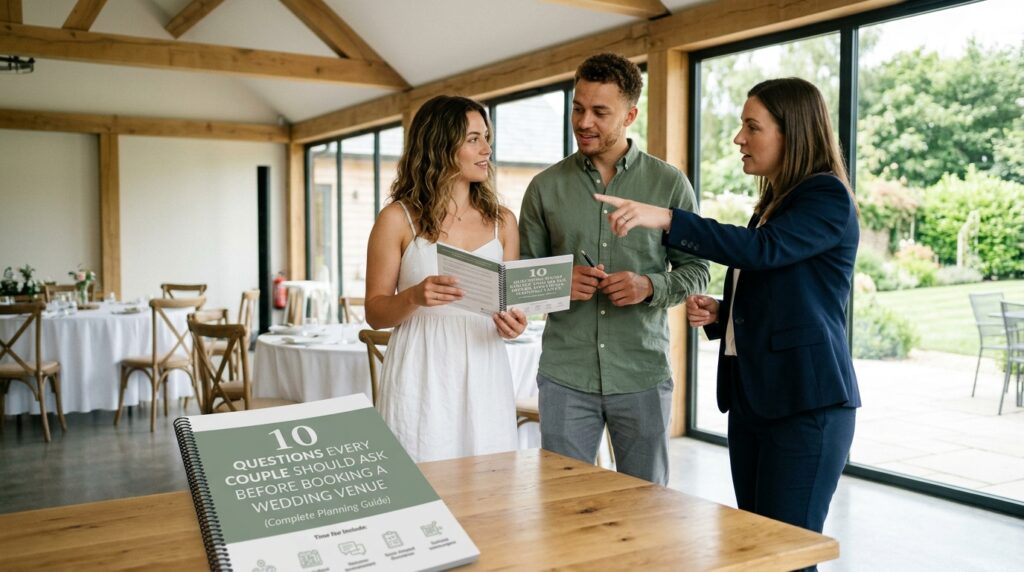
Choosing your wedding venue is one of the biggest decisions you’ll make during the planning process. Beyond beautiful décor and breathtaking views, the right venue should fit your guest count, budget, timeline, catering preferences, accessibility needs, and wedding vision.
Before signing a contract, couples should ask detailed questions about pricing, what’s included, vendor policies, weather backup plans, setup times, guest accommodations, and venue coordination. Asking these questions early helps avoid hidden costs, planning delays, and unexpected surprises while creating a smoother, more enjoyable wedding experience.
This guide walks you through the essential questions every couple should ask, plus expert planning tips, venue comparison strategies, and common mistakes to avoid before making your final decision.
What should couples ask before booking a wedding venue?
Before booking a wedding venue, ask about availability, pricing, guest capacity, what’s included in the rental fee, catering options, vendor policies, parking, accessibility, weather contingency plans, setup times, cancellation terms, and who will coordinate your wedding day. Understanding these details helps you compare venues confidently and avoid unexpected costs or logistical challenges.
Why Choosing the Right Wedding Venue Matters
Your wedding venue is more than a beautiful backdrop. It becomes the foundation for every major part of your celebration, influencing everything from guest comfort and event flow to photography, entertainment, catering, and overall atmosphere.
The right venue simplifies planning by bringing together the space, services, and support needed for a seamless event. The wrong venue can create unnecessary stress through hidden costs, scheduling conflicts, limited flexibility, or logistical challenges.
A thoughtfully chosen venue helps create:
- A welcoming atmosphere for guests
- Smooth coordination between vendors
- Better photography opportunities
- Comfortable guest movement
- Efficient event timelines
- Memorable dining and entertainment experiences
- Less stress for the couple and their families
Rather than choosing a venue based only on appearance, evaluate how well it supports the complete wedding experience.
Wedding Venue Booking Timeline
One of the most common planning mistakes is waiting too long to reserve a venue. Popular locations often book 12 to 18 months in advance, especially during peak wedding seasons.
Planning early gives you more flexibility with dates, vendors, and pricing.
| Timeline | Recommended Action |
|---|---|
| 12–18 Months Before | Research venues, establish budget, schedule tours |
| 10–12 Months Before | Compare proposals and request availability |
| 9–10 Months Before | Book your venue and secure your date |
| 6–8 Months Before | Finalize vendors and layout |
| 3–4 Months Before | Confirm guest count and floor plan |
| 1 Month Before | Final walkthrough with venue coordinator |
| Wedding Week | Confirm logistics, vendor arrivals, and emergency contacts |
Planner’s Insight: Booking early doesn’t just secure your preferred date. It also gives you access to more vendor options, better planning flexibility, and a less stressful experience.
Before Touring Any Wedding Venue
Before visiting venues, define your priorities.
Ask yourself:
- How many guests are you inviting?
- What style of wedding are you planning?
- What’s your overall wedding budget?
- Do you want an indoor or outdoor ceremony?
- Will your ceremony and reception be held at the same location?
- Do you require in-house catering?
- Are there cultural or family traditions that require specific accommodations?
Having clear answers helps you evaluate venues objectively instead of relying solely on first impressions.
Wedding Venue Decision Matrix
| Priority | Why It Matters |
|---|---|
| Budget | Prevents overspending |
| Guest Capacity | Ensures guest comfort |
| Location | Reduces travel complications |
| Catering | Impacts guest experience |
| Parking | Improves convenience |
| Accessibility | Supports all guests |
| Vendor Flexibility | Allows personalization |
| Weather Backup | Protects outdoor ceremonies |
| Bridal Suite | Enhances wedding day preparation |
| Event Coordination | Reduces planning stress |
Question #1: Is Our Preferred Wedding Date Available?
The first question should always be about availability.
Even the perfect venue isn’t the right fit if it isn’t available when you plan to get married.
If your preferred date isn’t available, ask:
- Are there nearby dates available?
- Do weekday weddings receive discounted pricing?
- Are off-season packages available?
- Can we reserve a backup date?
Being flexible with your wedding date may open up better pricing and more package options.
Peak Season vs Off-Season Weddings
| Peak Season | Off-Season |
|---|---|
| Greater demand | Better availability |
| Higher pricing | Potential discounts |
| Earlier booking required | More flexibility |
| Ideal weather | Budget-friendly options |
Choosing an off-season or weekday wedding may allow you to secure your dream venue while reducing overall costs.
Expert Planning Tip
Instead of asking only “Is our date available?”, ask:
“What dates provide the best value while still matching our wedding vision?”
This simple question often reveals package promotions or seasonal opportunities that couples might otherwise overlook.
Featured Snippet
Why is booking a wedding venue early important?
Booking a wedding venue early increases your chances of securing your preferred date, provides more flexibility when choosing vendors, may offer better pricing options, and gives you additional time to plan every aspect of your wedding without unnecessary stress.
Wedding Venue Red Flags 🚩
During your first venue tour, pay close attention to warning signs such as:
- Pricing that isn’t clearly explained
- Limited communication or delayed responses
- Poor maintenance or cleanliness
- Unclear cancellation policies
- Restricted vendor choices without explanation
- Lack of weather contingency plans
- Parking limitations not disclosed upfront
- No dedicated event coordinator
Recognizing these issues early can save you from expensive surprises later in the planning process.
Expert Insight
Many couples fall in love with a venue within minutes because of its architecture or scenery. While visual appeal is important, experienced wedding planners know that guest experience, logistics, transparency, and service quality have a much greater impact on how smoothly the day unfolds.
The most beautiful venue isn’t always the best venue. The best venue is the one that combines aesthetics with excellent planning support, clear communication, and a seamless experience for you and your guests.
Question #2: What Is Included in the Venue Rental Fee?
One of the biggest mistakes couples make is assuming that every wedding venue package includes the same amenities.
In reality, two venues with similar rental prices can offer completely different levels of service. One venue may include tables, chairs, setup, cleanup, bridal suites, and coordination, while another may simply provide the event space.
Before comparing prices, ask for a detailed breakdown of everything included in your venue rental.
Wedding Venue Package Comparison
| Feature | Included at Some Venues | Additional Fee at Others |
|---|---|---|
| Ceremony Space | ✅ | Sometimes |
| Reception Space | ✅ | Sometimes |
| Tables & Chairs | ✅ | Sometimes |
| Linens | Sometimes | Often |
| Bridal Suite | ✅ | Sometimes |
| Groom Suite | Sometimes | Sometimes |
| Setup & Cleanup | ✅ | Often |
| Dance Floor | Sometimes | Sometimes |
| Sound System | Sometimes | Often |
| Parking | Sometimes | Sometimes |
| Venue Coordinator | Sometimes | Often |
| Basic Décor | Sometimes | Often |
Planner’s Tip: Always compare the total value of the package, not just the rental price.
Questions You Should Ask
- Are tables and chairs included?
- Are linens available?
- Is setup included?
- Is cleanup included?
- Is a bridal suite provided?
- Is a groom’s lounge available?
- Is parking included?
- Is security included?
- Are there additional staffing charges?
- Are ceremony and reception spaces both included?
The more detailed your questions, the easier it becomes to compare venues fairly.
Expert Insight
A venue with a slightly higher rental fee may actually cost less overall if it includes rentals, staffing, and coordination services that would otherwise need to be booked separately.
Question #3: What Is the Total Cost, and Are There Any Hidden Fees?
Wedding budgets often exceed expectations because couples focus on the advertised venue price rather than the final invoice.
Always ask for an itemized estimate that clearly outlines every anticipated charge.
Hidden Wedding Venue Fees
Some additional charges may include:
- Security Deposit
- Service Charges
- Administrative Fees
- Sales Tax
- Overtime Fees
- Cleaning Fees
- Cake Cutting Fees
- Corkage Fees
- Outside Vendor Fees
- Ceremony Setup Fees
- Furniture Rental
- Lighting Upgrades
- Audio Equipment
- Generator Fees (Outdoor Events)
- Parking Fees
Cost Transparency Checklist
Request written confirmation for:
✔ Rental Fee
✔ Taxes
✔ Service Charges
✔ Gratuities
✔ Security Deposit
✔ Overtime Costs
✔ Vendor Fees
✔ Cleanup Costs
✔ Cancellation Fees
✔ Payment Schedule
A transparent proposal protects both you and the venue from misunderstandings.
Wedding Venue Budget Breakdown
Most couples allocate a significant portion of their wedding budget to the venue and reception.
| Budget Category | Suggested Percentage |
|---|---|
| Venue & Catering | 35–45% |
| Photography & Video | 10–15% |
| Flowers & Décor | 8–12% |
| Entertainment | 8–10% |
| Attire | 8–10% |
| Invitations & Stationery | 2–4% |
| Transportation | 2–4% |
| Miscellaneous | Remaining Budget |
Budget Advice: Don’t choose the least expensive venue without comparing included services. A venue with more amenities can reduce separate rental and vendor costs.
Question #4: How Many Guests Can the Venue Comfortably Accommodate?
Capacity isn’t just about fitting everyone into the room. A well-designed venue should allow guests to move comfortably between the ceremony, cocktail hour, dinner, and dance floor.
A venue that’s too small may feel crowded, while one that’s too large can make even a lively celebration feel empty.
Capacity Planning Guide
Ask the venue:
- What is the maximum legal occupancy?
- What is the recommended guest count for weddings?
- How many guests can be seated comfortably?
- Does the layout change for buffet service?
- Can the dance floor remain open during dinner?
- How much space is available for entertainment?
Wedding Size Comparison
| Guest Count | Recommended Venue Type |
|---|---|
| Up to 50 | Private Estate, Boutique Venue |
| 50–100 | Small Ballroom, Garden Venue |
| 100–200 | Banquet Hall, Golf Club |
| 200–300 | Large Ballroom |
| 300+ | Convention Center, Luxury Resort |
Space Planning Checklist
A great venue should have enough room for:
- Ceremony Seating
- Cocktail Hour
- Reception Tables
- Dance Floor
- DJ or Band
- Dessert Display
- Gift Table
- Guest Book
- Bar Area
- Photo Booth
- Lounge Seating
Planner’s Insight
Many couples only ask about maximum capacity.
A better question is:
“How many guests allow the venue to feel comfortable without feeling crowded?”
That answer is often more useful than the official occupancy limit.
Question #5: What Are the Catering Options?
Food is one of the most memorable parts of any wedding reception, so understanding your venue’s catering policies is essential.
Some venues provide in-house catering, while others allow outside caterers or offer a preferred vendor list.
Catering Models Explained
| Option | Advantages | Considerations |
|---|---|---|
| In-House Catering | Convenient, streamlined planning | Limited menu flexibility |
| Outside Caterer | Customized menus | Additional coordination |
| Preferred Vendor List | Trusted professionals | May reduce vendor choices |
| Exclusive Caterer | Consistent quality | Less flexibility |
Questions to Ask About Catering
- Is catering included in the venue package?
- Can we bring our own caterer?
- Is there an approved vendor list?
- Can menus be customized?
- Are tastings included?
- Are children’s meals available?
- Can dietary restrictions be accommodated?
- What beverage packages are available?
- Is alcohol service included?
- Are bartenders provided?
Dietary Accommodation Checklist
Professional venues should be prepared to accommodate:
✔ Vegetarian
✔ Vegan
✔ Gluten-Free
✔ Dairy-Free
✔ Nut Allergies
✔ Halal
✔ Kosher
✔ Children’s Meals
✔ Senior-Friendly Options
Catering Decision Matrix
| Priority | Best Choice |
|---|---|
| Simplicity | In-House Catering |
| Maximum Customization | Outside Caterer |
| Budget Control | Buffet Packages |
| Luxury Dining | Plated Service |
| Guest Interaction | Food Stations |
Featured Snippet
What should be included in a wedding venue package?
A comprehensive wedding venue package may include the ceremony and reception space, tables, chairs, linens, bridal and groom suites, setup and cleanup, parking, event coordination, basic audio equipment, and access to preferred vendors. Couples should request an itemized list to understand exactly what’s included before signing a contract.
Common Mistakes Couples Make
🚫 Comparing venues based only on rental price.
🚫 Forgetting to ask about overtime fees.
🚫 Ignoring guest comfort and venue layout.
🚫 Assuming catering policies are flexible.
🚫 Not requesting an itemized proposal.
🚫 Overlooking taxes and service charges.
Expert Venue Coordinator Tip
The venue should make your planning easier, not more complicated.
Look for a venue that is transparent about pricing, communicates clearly, offers flexible solutions when possible, and has an experienced team that can confidently answer your questions. Excellent communication during the planning process is often a strong indicator of how smoothly your wedding day will be managed.
Question #6: Are There Any Restrictions on Vendors?
One of the most overlooked aspects of booking a wedding venue is understanding its vendor policies. The vendors you choose, from your photographer to your florist, play a major role in bringing your vision to life.
Some venues offer complete flexibility, while others require couples to work exclusively with approved professionals.
Understanding these policies before signing a contract helps avoid unexpected costs, planning delays, or last-minute disappointments.
Types of Vendor Policies
| Policy Type | Advantages | Things to Consider |
|---|---|---|
| Open Vendor Policy | Complete flexibility | Couples manage vendor selection |
| Preferred Vendor List | Trusted professionals familiar with the venue | Limited choices |
| Exclusive Vendor Requirement | Streamlined coordination | Less personalization |
| Hybrid Approach | Some flexibility with approved vendors | Review restrictions carefully |
Questions to Ask
- Can we choose our own vendors?
- Is there an approved vendor list?
- Are outside vendors allowed?
- Is there an additional fee for outside vendors?
- Do vendors need liability insurance?
- What time can vendors access the venue?
- Are there loading dock or delivery restrictions?
- Is vendor parking available?
- Who coordinates vendor arrivals?
Vendors That May Be Affected
- Photographer
- Videographer
- DJ
- Live Band
- Florist
- Wedding Planner
- Caterer
- Bakery
- Rental Company
- Décor Team
- Transportation Services
- Photo Booth Provider
Planner’s Tip
A preferred vendor list isn’t necessarily a disadvantage. Vendors who frequently work at the venue already understand the layout, lighting, timelines, and logistics, which often leads to a smoother wedding day.
Vendor Coordination Checklist
Before booking, verify:
✔ Vendor arrival times
✔ Setup locations
✔ Breakdown schedule
✔ Equipment storage
✔ Electrical access
✔ Wi-Fi availability
✔ Insurance requirements
✔ Parking instructions
✔ Emergency contact information
Question #7: What Is the Backup Plan for Unexpected Situations?
Every couple hopes for perfect weather and a flawless celebration, but experienced planners know the importance of preparing for the unexpected.
Rain, high winds, extreme heat, power outages, or transportation delays can affect even the most carefully planned wedding.
The right venue should have a well-organized contingency plan.
Weather Backup Checklist
Ask the venue:
- Is there an indoor ceremony location?
- How quickly can the ceremony be relocated?
- Is there covered outdoor space?
- What happens if severe weather is forecast?
- Is backup power available?
- Are tents available if needed?
- Who makes the final weather decision?
- What is the rain plan timeline?
Indoor vs Outdoor Wedding Venue Comparison
| Indoor Venue | Outdoor Venue |
|---|---|
| Weather protected | Scenic natural backdrop |
| Climate controlled | Open-air atmosphere |
| Fewer weather concerns | Natural lighting for photos |
| Easier logistics | Seasonal flexibility required |
| Reliable acoustics | Backup plans essential |
Expert Insight
Even if you’re planning an outdoor ceremony, choose a venue where the indoor backup feels just as beautiful. A backup plan should feel like an equally exciting option, not a compromise.
Question #8: How Much Time Is Allowed for Setup and Cleanup?
Your wedding timeline affects far more than decorating. It influences vendor coordination, photography schedules, entertainment setup, and the overall flow of the day.
Some venues provide all-day access, while others operate within strict time windows.
Timeline Questions to Ask
- When can vendors begin setup?
- When can décor be delivered?
- What time can the wedding party arrive?
- What time must music end?
- What time must guests leave?
- Is cleanup included?
- Are overtime charges applied?
- Can decorations remain overnight?
Typical Venue Timeline
| Activity | Suggested Time |
|---|---|
| Vendor Arrival | 8:00–10:00 AM |
| Décor Setup | Morning |
| Photographer Arrival | 1–2 Hours Before Ceremony |
| Ceremony | Afternoon |
| Cocktail Hour | Immediately After Ceremony |
| Reception | Evening |
| Breakdown | After Reception |
Common Mistake
Many couples underestimate the time required for decorating. Floral installations, specialty lighting, and custom décor often require several hours of setup. Confirm that your venue allows enough access time for vendors to work efficiently.
Question #9: What Parking and Accessibility Options Are Available?
Guest comfort begins long before the ceremony starts.
Convenient parking, clear directions, and accessible facilities help create a positive first impression and ensure everyone can participate comfortably.
Parking Checklist
Ask the venue:
- How many parking spaces are available?
- Is parking complimentary?
- Is valet parking offered?
- Is overflow parking available?
- Are shuttle services recommended?
- Are electric vehicle charging stations available?
Accessibility Checklist
A truly welcoming venue should include:
✔ Wheelchair-accessible entrances
✔ Accessible restrooms
✔ Elevators (if multiple floors)
✔ Accessible parking
✔ Smooth walkways
✔ Adequate lighting
✔ Comfortable seating
✔ Clear directional signage
Guest Experience Tip
Think about your guests’ entire journey, from arriving at the venue to finding their seats. Easy parking and accessible facilities contribute significantly to a stress-free and enjoyable celebration.
Question #10: Who Will Be My Point of Contact on the Wedding Day?
No matter how carefully you plan, questions and unexpected situations can arise during the event.
Having a dedicated venue representative ensures quick decisions and smooth coordination.
Questions to Ask
- Will there be an on-site venue coordinator?
- Who manages vendor arrivals?
- Who handles emergencies?
- Who oversees setup and cleanup?
- Who communicates with the catering team?
- Who monitors the reception timeline?
- Can we meet our coordinator before the wedding?
Wedding Day Coordinator Responsibilities
A venue coordinator typically helps with:
- Vendor check-in
- Timeline management
- Venue logistics
- Guest assistance
- Facility maintenance
- Emergency coordination
- Communication with planners and vendors
Expert Planner Insight
A venue coordinator is different from a wedding planner.
The venue coordinator manages venue operations, while a wedding planner oversees your entire wedding experience, including vendors, décor, schedules, and personal details. Knowing the difference helps set realistic expectations.
Venue Contract Red Flags 🚩
Before signing any agreement, review the contract carefully.
Watch for:
- Unclear cancellation policies
- Undefined overtime fees
- Hidden service charges
- Vague payment schedules
- Limited liability explanations
- Vendor exclusivity clauses
- Damage deposit terms
- Force majeure policies
- Insurance requirements
- Decoration restrictions
If anything is unclear, ask for clarification in writing before signing.
Wedding Venue Tour Scorecard
Use this simple checklist during each venue visit.
| Category | Rating (1–5) |
|---|---|
| Overall Appearance | ⭐⭐⭐⭐⭐ |
| Staff Professionalism | ⭐⭐⭐⭐⭐ |
| Cleanliness | ⭐⭐⭐⭐⭐ |
| Guest Flow | ⭐⭐⭐⭐⭐ |
| Parking | ⭐⭐⭐⭐⭐ |
| Accessibility | ⭐⭐⭐⭐⭐ |
| Ceremony Space | ⭐⭐⭐⭐⭐ |
| Reception Space | ⭐⭐⭐⭐⭐ |
| Bridal Suite | ⭐⭐⭐⭐⭐ |
| Value for Money | ⭐⭐⭐⭐⭐ |
Comparing venues using the same criteria makes it easier to make an objective decision.
Featured Snippet
What should couples look for during a wedding venue tour?
During a wedding venue tour, couples should evaluate guest capacity, layout, parking, accessibility, vendor policies, catering options, bridal suites, weather backup plans, setup and cleanup times, and overall communication from the venue team. Reviewing these details helps identify whether the venue supports both the wedding vision and practical event logistics.
Wedding Venue Decision Checklist
Before making your final decision, confirm that the venue:
- Fits your budget
- Accommodates your guest list comfortably
- Matches your wedding style
- Offers transparent pricing
- Provides reliable communication
- Has a strong weather contingency plan
- Supports your preferred vendors
- Includes essential amenities
- Meets accessibility needs
- Has positive reviews and a professional team
Expert Final Advice
The perfect wedding venue isn’t simply the one with the grandest ballroom or the most picturesque scenery. It’s the venue that combines beautiful surroundings with exceptional service, transparent communication, thoughtful planning support, and an environment where you and your guests can celebrate comfortably.
Choosing a venue is one of the first and most important wedding decisions you’ll make. Taking the time to ask detailed questions today can prevent unnecessary stress tomorrow and help ensure your wedding day unfolds exactly as you imagined.
Booking a wedding venue is about far more than choosing a beautiful location. The right venue should support your vision, fit your budget, accommodate your guest list comfortably, offer transparent pricing, provide reliable coordination, and simplify every stage of the planning process.
By asking the right questions before signing a contract, couples can avoid hidden costs, minimize stress, and create a celebration that guests will remember for years to come.
Key Takeaways
✔ Book your venue 12–18 months in advance whenever possible.
✔ Compare venues based on total value, not just rental price.
✔ Always request a complete breakdown of included services and additional fees.
✔ Confirm guest capacity, parking, accessibility, and weather contingency plans.
✔ Review vendor policies before hiring photographers, florists, caterers, and entertainers.
✔ Read every section of the venue contract before signing.
✔ Choose a venue that supports your overall wedding vision instead of focusing only on appearance.
Wedding Venue Comparison Worksheet
| Category | Venue A | Venue B | Venue C |
|---|---|---|---|
| Rental Cost | |||
| Guest Capacity | |||
| Ceremony Included | |||
| Reception Included | |||
| Catering Options | |||
| Parking | |||
| Bridal Suite | |||
| Vendor Flexibility | |||
| Accessibility | |||
| Weather Backup | |||
| Event Coordinator | |||
| Overall Rating |
This worksheet makes it easier to compare venues objectively instead of relying solely on first impressions.
Wedding Venue Tour Checklist
Bring this checklist with you when touring potential venues.
Venue
☐ Exterior appearance
☐ Ceremony location
☐ Reception hall
☐ Bridal suite
☐ Groom suite
☐ Restrooms
☐ Accessibility
☐ Parking
☐ Lighting
☐ Landscaping
Guest Experience
☐ Comfortable seating
☐ Cocktail hour space
☐ Dance floor
☐ Bar location
☐ Photo opportunities
☐ Noise levels
☐ Climate control
☐ Directional signage
Logistics
☐ Vendor loading area
☐ Setup access
☐ Cleanup procedures
☐ Emergency exits
☐ Weather backup
☐ Power supply
☐ Wi-Fi availability
☐ Storage space
Wedding Venue Contract Checklist
Before signing your agreement, confirm:
✔ Rental fee
✔ Deposit amount
✔ Payment schedule
✔ Cancellation policy
✔ Rescheduling policy
✔ Force majeure clause
✔ Liability requirements
✔ Insurance requirements
✔ Vendor policies
✔ Decoration rules
✔ Music restrictions
✔ Alcohol policies
✔ Cleanup responsibilities
✔ Overtime charges
✔ Damage policies
Common Wedding Venue Mistakes to Avoid
Many couples unintentionally create planning challenges by overlooking small but important details.
Avoid these common mistakes:
Booking Based Only on Appearance
Beautiful architecture doesn’t always translate into a smooth guest experience.
Ignoring Guest Comfort
Think about:
- Parking
- Walking distance
- Restrooms
- Seating
- Accessibility
- Climate control
Not Reading the Contract Carefully
Never assume verbal conversations override written agreements.
Always verify every detail before signing.
Forgetting About Vendor Logistics
Ask where vendors will:
- Park
- Load equipment
- Store supplies
- Access electricity
Underestimating Setup Time
Large floral installations, custom décor, and specialty lighting often require several additional hours.
Choosing a Venue That Doesn’t Match Your Wedding Style
A luxury ballroom may not suit a relaxed garden wedding, while a rustic barn may not align with a formal black-tie celebration.
Planner’s Pro Tips
Experienced wedding planners often recommend:
- Visit venues at the same time of day your wedding will take place.
- Attend an open house if available.
- Ask to see both ceremony and reception setups.
- Review online reviews for recent events.
- Request photos from weddings similar in size to yours.
- Ask about backup plans before discussing décor.
- Bring a notebook and take photos during every venue tour.
FAQs
1. How far in advance should I book a wedding venue?
Most couples reserve their venue 12 to 18 months before the wedding, especially for popular dates and peak seasons.
2. What should I ask during a wedding venue tour?
Ask about pricing, guest capacity, catering, parking, accessibility, vendor policies, weather backups, setup times, and what’s included in the rental package.
3. How much of my wedding budget should go toward the venue?
Many couples allocate 30–40% of their total budget to the venue and catering combined, though the ideal percentage depends on priorities and location.
4. Is it better to book the venue before other vendors?
Yes. Your venue determines the wedding date, timeline, and logistics, making it easier to secure photographers, caterers, entertainers, and other vendors.
5. What hidden fees should I ask about?
Ask about service charges, taxes, overtime fees, cleaning fees, security deposits, vendor fees, corkage, cake-cutting charges, and equipment rentals.
6. Can I negotiate wedding venue pricing?
Some venues may offer greater flexibility for weekday weddings, off-season dates, or bundled service packages.
7. Should I book the ceremony and reception at the same venue?
Hosting both events at one location can simplify logistics, reduce travel time, and provide a more seamless experience for guests.
8. How do I know if a venue is too small?
Beyond seating capacity, consider space for cocktail hour, dancing, entertainment, buffet stations, and guest circulation.
9. What’s the difference between venue capacity and comfortable capacity?
Maximum capacity reflects legal occupancy, while comfortable capacity considers guest movement, seating arrangements, and event flow.
10. What amenities should a wedding venue include?
Common amenities include ceremony space, reception hall, tables, chairs, bridal suite, parking, restrooms, climate control, and event coordination.
11. Should I choose an indoor or outdoor wedding venue?
The best choice depends on your wedding style, season, guest comfort, and backup plans. Outdoor weddings should always include a reliable weather contingency.
12. Why is an event coordinator important?
A venue coordinator manages logistics, communicates with vendors, and helps ensure the event runs according to schedule.
13. Can I bring my own caterer?
Some venues allow outside caterers, while others require in-house or preferred catering partners. Always confirm policies before booking.
14. What questions should I ask about parking?
Ask about available spaces, valet services, accessibility, overflow parking, shuttle options, and any associated fees.
15. Are wedding venue deposits refundable?
Refund policies vary by venue. Carefully review cancellation and rescheduling terms before signing your contract.
16. Should I visit a venue more than once?
Yes. Visiting at different times of day can help you evaluate lighting, traffic, and overall atmosphere.
17. What if my guest count changes?
Discuss minimum and maximum guest count policies with the venue, along with any deadlines for updating attendance numbers.
18. How do I compare multiple wedding venues?
Use a checklist to evaluate pricing, services, guest experience, flexibility, communication, and overall value rather than appearance alone.
19. Are preferred vendor lists beneficial?
Preferred vendors often know the venue well, which can improve coordination and reduce logistical issues.
20. What should I look for in a venue contract?
Review payment schedules, cancellation terms, overtime fees, liability clauses, vendor policies, insurance requirements, and included services.
21. How important is accessibility?
Accessible entrances, restrooms, parking, and pathways help ensure every guest can comfortably enjoy the celebration.
22. Can I customize the venue layout?
Many venues offer flexible floor plans, but always confirm layout options before booking.
23. What should I ask about weather contingency plans?
Ask where the ceremony will move, how quickly the transition can occur, and who makes weather-related decisions.
24. How do I know if a venue offers good value?
Compare included services, staff support, amenities, flexibility, and guest experience rather than focusing solely on rental price.
25. What makes a wedding venue truly exceptional?
Exceptional venues combine beautiful surroundings, transparent pricing, experienced staff, thoughtful amenities, flexible planning support, and excellent communication from booking through the wedding day.
Featured Snippet
What are the most important questions to ask before booking a wedding venue?
The most important questions include availability, total cost, included amenities, guest capacity, catering policies, vendor restrictions, parking, accessibility, weather backup plans, setup times, and who will coordinate your wedding day. These details help couples compare venues accurately and avoid unexpected surprises.