
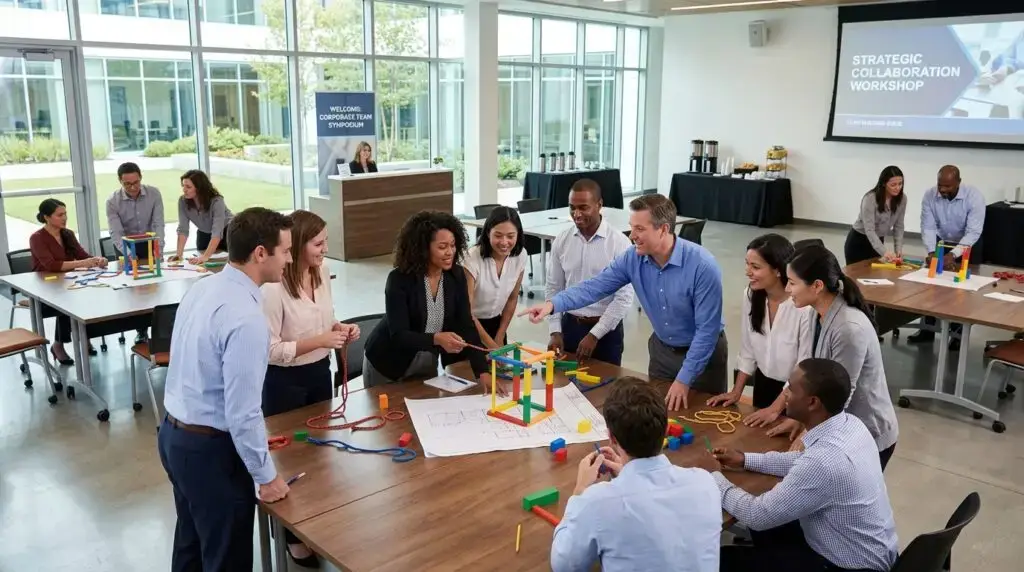
Team-building events are most successful when employees can step away from everyday workplace distractions and focus on collaboration, communication, and shared experiences. Hosting these events at a dedicated venue provides professional meeting spaces, flexible layouts, modern technology, catering services, and an environment designed for engagement.
Whether you’re planning a corporate retreat, leadership workshop, employee appreciation event, onboarding session, or strategic planning meeting, choosing the right venue helps strengthen workplace relationships, improve productivity, encourage innovation, and support long-term organizational success.
This guide explores the business benefits of dedicated event venues while providing practical planning advice, venue selection tips, budgeting guidance, and expert recommendations.
Quick Answer
Why should businesses host team-building events at a dedicated venue?
Dedicated venues create an environment that minimizes workplace distractions while maximizing collaboration, communication, creativity, and employee engagement. They provide professional meeting spaces, flexible layouts, technology, catering, and event support that help organizations deliver more organized, productive, and memorable team-building experiences.
Why Team-Building Matters More Than Ever
Today’s workplace is changing rapidly.
Hybrid work models, remote teams, fast-paced schedules, and increasing workplace demands have made meaningful employee connections more important than ever.
Organizations that actively invest in team development often experience:
- Stronger communication
- Higher employee engagement
- Increased productivity
- Better problem-solving
- Improved retention
- Greater innovation
- Healthier workplace culture
Team-building is no longer viewed as an occasional employee perk. It’s a strategic investment in long-term business success.
The Hidden Cost of Poor Team Collaboration
Many companies underestimate how communication challenges affect daily operations.
Poor collaboration can lead to:
- Missed deadlines
- Duplicate work
- Miscommunication
- Lower morale
- Increased turnover
- Customer service issues
- Reduced productivity
A well-planned off-site team-building event helps employees reconnect, communicate more effectively, and develop stronger working relationships that continue long after the event ends.
Team-Building Benefits at a Glance
| Business Challenge | How Dedicated Venues Help |
|---|---|
| Poor Communication | Encourages open discussions |
| Low Employee Morale | Creates memorable shared experiences |
| Department Silos | Promotes cross-functional collaboration |
| Workplace Stress | Provides a refreshing change of environment |
| Leadership Development | Supports interactive learning |
| Employee Retention | Strengthens company culture |
Why the Venue Matters as Much as the Activities
Many businesses spend weeks planning workshops and exercises but overlook one critical factor:
The environment where those activities take place.
A meeting held in the same office conference room rarely delivers the same energy as an event hosted in a purpose-built venue.
Dedicated venues naturally encourage:
- Creative thinking
- Active participation
- Meaningful conversations
- Better focus
- Greater collaboration
- Stronger engagement
The setting itself becomes part of the experience.
Business Case for Off-Site Team-Building
Companies increasingly choose off-site venues because they help employees:
✔ Disconnect from daily distractions
✔ Build stronger professional relationships
✔ Develop leadership skills
✔ Solve problems collaboratively
✔ Improve communication
✔ Increase motivation
✔ Encourage innovation
✔ Strengthen organizational culture
These benefits contribute directly to improved business performance.
Featured Snippet
Why are off-site team-building events more effective?
Off-site team-building events remove employees from everyday workplace distractions, allowing them to focus on collaboration, communication, creativity, and relationship building. Dedicated venues also provide professional facilities, flexible event spaces, technology, and support services that improve both the planning process and the overall participant experience.
Section 1: A Change of Environment Inspires Fresh Thinking
One of the greatest advantages of hosting a team-building event at a dedicated venue is the opportunity to break away from familiar routines.
Office environments naturally trigger work-focused thinking.
Employees remain surrounded by:
- Emails
- Meetings
- Deadlines
- Interruptions
- Daily responsibilities
Even during scheduled activities, it’s easy for attention to drift back toward unfinished work.
An off-site venue creates a psychological reset that encourages participants to think differently, interact more openly, and become fully engaged in the experience.
How a New Environment Benefits Teams
A change of setting helps employees:
- View challenges from new perspectives.
- Build stronger interpersonal relationships.
- Participate more actively.
- Feel less pressure from daily responsibilities.
- Develop creative solutions together.
This fresh perspective often leads to better collaboration during the event and stronger teamwork afterward.
Environment Comparison
| Office Setting | Dedicated Event Venue |
|---|---|
| Frequent interruptions | Minimal distractions |
| Routine atmosphere | Inspiring environment |
| Limited flexibility | Purpose-built event spaces |
| Daily work reminders | Focused collaboration |
| Restricted layouts | Adaptable meeting spaces |
Professional Planner Insight
Organizations often focus heavily on selecting engaging activities but underestimate the influence of the environment itself.
The right venue doesn’t simply provide space. It creates the conditions where meaningful conversations, stronger relationships, and collaborative problem-solving happen naturally.
Employees who step outside their normal routines are often more receptive to learning, participating, and contributing new ideas.
Common Mistakes Businesses Make
Avoid these early planning mistakes:
❌ Holding team-building sessions in busy office spaces.
❌ Choosing a venue based solely on price.
❌ Ignoring employee comfort.
❌ Underestimating the importance of the event environment.
❌ Failing to define clear business objectives before planning activities.
Benefit #2: Better Focus Leads to Better Results
One of the biggest challenges with hosting team-building activities inside the workplace is the constant stream of distractions.
Even when employees block time on their calendars, it’s difficult to disconnect from:
- Incoming emails
- Phone calls
- Instant messages
- Client requests
- Meetings
- Daily deadlines
These interruptions reduce participation and prevent employees from fully engaging in activities designed to strengthen collaboration.
A dedicated venue creates a distraction-free environment where teams can focus entirely on learning, problem-solving, and relationship building.
Productivity Comparison
| Office Environment | Dedicated Venue |
|---|---|
| Frequent interruptions | Minimal distractions |
| Employees multitask | Full participation |
| Routine mindset | Growth mindset |
| Constant notifications | Focused collaboration |
| Limited engagement | Higher interaction |
Expert Insight
Research in workplace productivity consistently shows that uninterrupted focus improves learning, decision-making, and creative thinking. A dedicated venue provides employees with the mental space needed to fully engage in team-building exercises.
Benefit #3: Professional Event Spaces Improve Organization
Unlike office meeting rooms that often require significant preparation, dedicated venues are designed specifically for professional events.
This allows organizers to spend less time solving logistical problems and more time delivering meaningful experiences.
Features of a Professional Event Venue
Many dedicated venues include:
✔ Flexible meeting rooms
✔ Breakout spaces
✔ Presentation stages
✔ High-speed Wi-Fi
✔ Audio-visual equipment
✔ Large projection screens
✔ Professional lighting
✔ Comfortable seating
✔ Catering facilities
✔ Event coordination support
These resources help create a polished and organized experience that reflects positively on your organization.
Office Meeting Room vs Dedicated Event Venue
| Office Meeting Room | Dedicated Event Venue |
|---|---|
| Fixed furniture | Flexible layouts |
| Limited equipment | Professional AV systems |
| Small capacity | Multiple room options |
| Self-managed logistics | Event support staff |
| Limited catering | Full-service catering |
Planner’s Tip
When evaluating venues, don’t focus only on square footage. Consider how the space supports presentations, networking, breakout sessions, and collaborative activities throughout the day.
Benefit #4: Stronger Collaboration Across Departments
Many employees spend most of their workday interacting with members of their own department.
While this supports specialized work, it can also create communication barriers between teams.
Dedicated team-building events encourage employees from different departments to connect in ways that rarely happen during everyday work.
Cross-Department Benefits
Team-building events help employees:
- Understand different roles within the organization.
- Build trust across departments.
- Improve communication.
- Share knowledge.
- Develop creative solutions together.
- Strengthen company-wide relationships.
These stronger connections often lead to smoother collaboration after employees return to work.
Department Collaboration Matrix
| Department | Collaboration Opportunity |
|---|---|
| Sales | Marketing |
| Marketing | Operations |
| Human Resources | Leadership |
| Finance | Project Management |
| Customer Service | Product Teams |
| IT | Every Department |
Breaking down organizational silos creates a more unified workplace.
Benefit #5: Supports Leadership Development
Team-building activities provide managers with opportunities to observe employees in situations that differ from their normal responsibilities.
Leadership qualities often emerge during collaborative exercises, problem-solving challenges, and group discussions.
Leadership Skills Developed
Employees strengthen:
✔ Communication
✔ Decision-Making
✔ Conflict Resolution
✔ Time Management
✔ Critical Thinking
✔ Emotional Intelligence
✔ Adaptability
✔ Accountability
Why This Matters
Many future leaders demonstrate their abilities during collaborative activities long before they receive formal management roles.
Team-building events create opportunities for these strengths to become visible.
Leadership Development Framework
| Activity | Leadership Skill |
|---|---|
| Group Challenges | Decision-Making |
| Problem Solving | Critical Thinking |
| Presentations | Communication |
| Team Projects | Collaboration |
| Strategy Workshops | Planning |
| Discussions | Active Listening |
Benefit #6: Improves Employee Engagement
Employee engagement directly affects productivity, retention, innovation, and workplace satisfaction.
Organizations that invest in meaningful employee experiences often experience stronger long-term performance.
Hosting a well-organized off-site event sends a clear message:
Your employees matter.
Employee Engagement Benefits
Professional team-building events help:
- Increase motivation.
- Strengthen loyalty.
- Improve morale.
- Encourage participation.
- Build stronger workplace relationships.
- Reinforce company values.
Employees who feel appreciated are more likely to remain engaged with their work and contribute positively to organizational success.
Engagement Comparison
| Low Engagement | High Engagement |
|---|---|
| Poor communication | Open communication |
| Low morale | Positive culture |
| Limited collaboration | Strong teamwork |
| Higher turnover | Better retention |
| Lower productivity | Greater performance |
Professional Insight
Employee engagement isn’t created through one annual event.
It’s built through consistent investment in meaningful experiences that strengthen relationships, encourage communication, and support professional growth.
Corporate Event Planning Checklist
Before booking your venue, confirm:
Event Goals
☐ Improve communication
☐ Leadership development
☐ Employee appreciation
☐ Strategic planning
☐ Cross-department collaboration
Venue Features
☐ Meeting rooms
☐ Breakout spaces
☐ Parking
☐ Accessibility
☐ Wi-Fi
☐ AV equipment
☐ Catering
☐ Outdoor space
☐ Event coordinator
Technology
☐ Microphones
☐ Projectors
☐ Screens
☐ Sound system
☐ Presentation clickers
☐ Charging stations
Guest Experience
☐ Comfortable seating
☐ Refreshments
☐ Networking space
☐ Clear signage
☐ Registration area
Event Budget Considerations
When budgeting for an off-site team-building event, include:
| Category | Typical Budget Allocation |
|---|---|
| Venue Rental | 25–35% |
| Catering | 20–30% |
| Activities & Facilitators | 15–20% |
| AV & Technology | 5–10% |
| Transportation | 5–10% |
| Materials & Supplies | 5–10% |
| Contingency Fund | 5–10% |
Budget Tip: Focus on overall value rather than choosing the lowest-priced venue. Facilities, technology, and event support often reduce additional expenses elsewhere.
Featured Snippet
Why are dedicated venues better for corporate team-building events?
Dedicated venues provide distraction-free environments, flexible meeting spaces, professional technology, catering services, and event coordination that help organizations deliver engaging, productive, and well-organized team-building experiences. These venues encourage stronger collaboration, leadership development, and employee engagement while simplifying event logistics.
Common Planning Mistakes
Avoid these mistakes:
❌ Booking a venue without visiting it first.
❌ Choosing a space too small for activities.
❌ Forgetting breakout room requirements.
❌ Underestimating technology needs.
❌ Not planning for networking time.
❌ Ignoring accessibility and parking.
❌ Treating team-building as a presentation instead of an interactive experience.
Expert Event Planner Advice
The most successful corporate events strike a balance between structured learning and meaningful interaction.
Instead of filling every minute with presentations, create opportunities for employees to collaborate naturally through discussions, challenges, shared meals, and informal networking.
Those conversations often become the most valuable part of the day because they strengthen workplace relationships long after the event ends.
Benefit #7: Strengthens Company Culture
A positive workplace culture doesn’t develop through mission statements alone. It grows through shared experiences, meaningful interactions, and opportunities for employees to build trust beyond their daily responsibilities.
Dedicated team-building events give employees the time and space to connect on a personal level, helping create a stronger sense of belonging and unity.
Organizations with strong workplace cultures often experience:
- Higher employee satisfaction
- Better collaboration
- Improved retention
- Increased accountability
- Greater organizational loyalty
- Stronger employer branding
Company Culture Comparison
| Weak Culture | Strong Culture |
|---|---|
| Limited communication | Open communication |
| Department silos | Cross-functional teamwork |
| Low engagement | High participation |
| High turnover | Strong retention |
| Minimal recognition | Regular appreciation |
| Reactive leadership | Collaborative leadership |
Expert Insight
Culture isn’t built during annual meetings. It’s built through consistent experiences that encourage employees to work together, celebrate successes, and solve challenges collectively.
Benefit #8: Encourages Innovation & Creative Thinking
Creativity often declines when employees remain in familiar environments and repetitive routines.
A dedicated venue provides a fresh setting that encourages:
- Brainstorming
- Strategic thinking
- Creative problem-solving
- Open discussions
- New perspectives
Changing the environment helps employees think beyond their everyday workflows and generate innovative ideas that may not emerge during regular office meetings.
Creative Collaboration Activities
Dedicated venues support activities such as:
✔ Innovation workshops
✔ Design thinking sessions
✔ Strategy planning
✔ Leadership roundtables
✔ Cross-functional brainstorming
✔ Product development discussions
✔ Interactive simulations
✔ Group challenges
Traditional Meeting vs Innovation Workshop
| Traditional Office Meeting | Off-Site Workshop |
|---|---|
| Structured agenda | Interactive collaboration |
| Limited discussion | Open brainstorming |
| Routine environment | Inspiring atmosphere |
| Passive participation | Active engagement |
| Short-term focus | Long-term strategy |
Planner’s Recommendation
Include breakout sessions throughout the day rather than scheduling one long presentation. Smaller group discussions often generate more participation and actionable ideas.
Benefit #9: Professional Catering Enhances the Experience
Food plays a significant role in how attendees remember an event.
A professionally catered meal does more than satisfy hunger. It creates natural networking opportunities, encourages conversation, and helps maintain energy throughout the day.
Advantages of On-Site Catering
Dedicated event venues often provide:
✔ Customized menus
✔ Buffet or plated service
✔ Coffee and refreshment stations
✔ Dietary accommodations
✔ Scheduled meal service
✔ Professional staff
✔ Setup and cleanup
Catering Service Comparison
| Self-Managed Catering | Professional Venue Catering |
|---|---|
| Requires additional coordination | Managed by experienced staff |
| Limited menu options | Customized selections |
| Separate vendor management | Integrated service |
| Increased logistical work | Simplified planning |
Dietary Considerations
Professional venues should accommodate:
- Vegetarian
- Vegan
- Gluten-Free
- Dairy-Free
- Nut Allergies
- Halal
- Kosher
- Low-Sodium Options
Providing inclusive menu choices demonstrates consideration for every attendee.
Benefit #10: Supports Corporate Retreats & Long-Term Planning
Many organizations combine team-building activities with strategic planning sessions.
Dedicated venues provide flexible environments where teams can transition smoothly between:
- Presentations
- Workshops
- Networking
- Leadership meetings
- Collaborative exercises
- Recreation
This balance keeps participants engaged while maximizing productivity.
Corporate Retreat Agenda Example
| Time | Activity |
|---|---|
| 8:00 AM | Registration & Breakfast |
| 9:00 AM | Leadership Presentation |
| 10:30 AM | Team-Building Exercise |
| 12:00 PM | Lunch |
| 1:00 PM | Strategy Workshop |
| 3:00 PM | Breakout Sessions |
| 4:30 PM | Action Planning |
| 5:30 PM | Networking Reception |
Why Retreats Work
Stepping away from the office allows leadership teams to focus on long-term goals without the interruptions of daily operations.
Measuring the Return on Investment (ROI)
Some organizations hesitate to invest in off-site events because the benefits aren’t immediately reflected in financial reports.
However, successful team-building often delivers measurable long-term value.
Potential Business Outcomes
| Investment Area | Potential Organizational Benefit |
|---|---|
| Team Collaboration | Faster project completion |
| Leadership Development | Stronger internal talent pipeline |
| Employee Engagement | Improved retention |
| Communication | Fewer workplace misunderstandings |
| Strategic Planning | Better execution of business goals |
| Professional Development | Increased employee confidence |
KPIs to Measure Success
After your event, evaluate:
- Employee feedback scores
- Attendance rate
- Participation level
- Cross-department collaboration
- Employee engagement surveys
- Manager observations
- Retention trends
- Productivity improvements
Venue Selection Framework
When evaluating dedicated venues, score each option using consistent criteria.
| Evaluation Area | Importance |
|---|---|
| Location | ⭐⭐⭐⭐⭐ |
| Meeting Space | ⭐⭐⭐⭐⭐ |
| Technology | ⭐⭐⭐⭐⭐ |
| Catering | ⭐⭐⭐⭐ |
| Parking | ⭐⭐⭐⭐ |
| Accessibility | ⭐⭐⭐⭐⭐ |
| Event Support | ⭐⭐⭐⭐⭐ |
| Budget | ⭐⭐⭐⭐⭐ |
| Flexibility | ⭐⭐⭐⭐ |
| Overall Experience | ⭐⭐⭐⭐⭐ |
Corporate Event Success Checklist
Before your event begins, verify:
Planning
☐ Objectives clearly defined
☐ Budget approved
☐ Agenda finalized
☐ Speakers confirmed
Venue
☐ Room setup complete
☐ AV tested
☐ Signage installed
☐ Registration ready
Vendors
☐ Catering confirmed
☐ Photographer scheduled
☐ Entertainment prepared
☐ Materials delivered
Guest Experience
☐ Welcome materials prepared
☐ Name badges printed
☐ Networking areas ready
☐ Accessibility confirmed
Featured Snippet
How do team-building events improve workplace performance?
Team-building events improve workplace performance by strengthening communication, encouraging collaboration, developing leadership skills, increasing employee engagement, and fostering a positive company culture. Hosting these events at a dedicated venue further enhances the experience by providing professional facilities, fewer distractions, and resources designed to support productive collaboration.
Common Mistakes Companies Make
Avoid these common planning errors:
❌ Scheduling presentations all day without interactive activities.
❌ Choosing a venue with inadequate technology.
❌ Ignoring employee dietary needs.
❌ Failing to define measurable objectives.
❌ Overloading the schedule without breaks.
❌ Neglecting networking opportunities.
❌ Forgetting post-event feedback collection.
Professional Event Planner Insight
The most successful corporate events don’t try to impress attendees with extravagant entertainment alone.
Instead, they create an environment where employees feel comfortable sharing ideas, collaborating across departments, learning new skills, and building stronger professional relationships.
When participants leave with new connections, fresh ideas, and a clearer understanding of organizational goals, the event has delivered lasting value beyond the day itself.
Quick Summary
Hosting team-building events at a dedicated venue is more than an opportunity to step away from the office. It’s a strategic investment in employee engagement, leadership development, collaboration, innovation, and long-term organizational success.
A professionally designed venue provides the environment, resources, and support needed to help teams communicate more effectively, strengthen relationships, and achieve business objectives without the distractions of the everyday workplace.
Whether you’re planning a leadership retreat, employee appreciation event, corporate workshop, annual meeting, or company-wide conference, choosing the right venue can significantly influence the success of your event.
Key Takeaways
✔ Choose a venue that supports your business objectives, not just your budget.
✔ Define measurable goals before planning activities.
✔ Prioritize collaboration over presentations.
✔ Select flexible meeting spaces with modern technology.
✔ Include opportunities for networking and informal conversations.
✔ Measure post-event results to improve future planning.
✔ Invest in employee experiences that strengthen workplace culture.
Corporate Team-Building Planning Checklist
Strategy & Objectives
☐ Define business goals
☐ Identify target participants
☐ Establish success metrics
☐ Secure executive approval
☐ Create event budget
Venue Selection
☐ Book dedicated venue
☐ Confirm meeting rooms
☐ Review technology
☐ Verify parking
☐ Check accessibility
☐ Confirm catering
☐ Review contracts
Vendors
☐ Catering confirmed
☐ AV provider scheduled
☐ Facilitator booked
☐ Photographer arranged
☐ Transportation organized
Employee Experience
☐ Registration completed
☐ Name badges printed
☐ Team assignments created
☐ Activity materials prepared
☐ Welcome gifts ready
Event Day
☐ Venue walkthrough
☐ Technology tested
☐ Staff briefing
☐ Vendor check-in
☐ Registration opens
☐ Timeline monitored
After the Event
☐ Employee survey
☐ Budget review
☐ Vendor evaluation
☐ Leadership debrief
☐ Improvement recommendations
Team-Building Event Timeline
| Timeline | Primary Tasks |
|---|---|
| 6–12 Months | Budget, venue selection, objectives |
| 4–6 Months | Vendors, facilitators, agenda |
| 2–3 Months | Employee registration, catering |
| 1 Month | Final logistics, materials |
| 1 Week | Vendor confirmations |
| Event Day | Execution & coordination |
| After Event | Evaluation & reporting |
Venue Evaluation Worksheet
Score each venue using the following framework.
| Evaluation Area | Rating (1–5) |
|---|---|
| Location | ⭐⭐⭐⭐⭐ |
| Parking | ⭐⭐⭐⭐⭐ |
| Accessibility | ⭐⭐⭐⭐⭐ |
| Meeting Rooms | ⭐⭐⭐⭐⭐ |
| Breakout Spaces | ⭐⭐⭐⭐⭐ |
| Technology | ⭐⭐⭐⭐⭐ |
| Catering | ⭐⭐⭐⭐⭐ |
| Event Support | ⭐⭐⭐⭐⭐ |
| Overall Value | ⭐⭐⭐⭐⭐ |
This structured approach helps compare venues objectively instead of relying on visual appeal alone.
Measuring Event ROI
Successful organizations evaluate team-building events using measurable outcomes rather than assumptions.
Business Metrics
- Employee engagement scores
- Staff retention
- Productivity improvements
- Cross-department collaboration
- Leadership participation
- Employee satisfaction
- Internal communication quality
- Training effectiveness
ROI Measurement Framework
| KPI | Measurement Method |
|---|---|
| Employee Satisfaction | Post-event surveys |
| Attendance | Registration data |
| Participation | Activity completion rates |
| Collaboration | Manager feedback |
| Productivity | Team performance metrics |
| Retention | HR reporting |
| Knowledge Retention | Follow-up assessments |
Post-Event Review Checklist
Within one week after the event:
☐ Collect employee feedback
☐ Review vendor performance
☐ Analyze budget accuracy
☐ Document lessons learned
☐ Share event highlights
☐ Recognize contributors
☐ Archive planning materials
☐ Schedule follow-up actions
Continuous improvement makes every future event more successful.
FAQs
1. Why are team-building events important?
Team-building events strengthen communication, improve collaboration, increase employee engagement, and support a positive workplace culture.
2. Why choose a dedicated venue instead of the office?
Dedicated venues minimize workplace distractions while providing professional meeting spaces, technology, catering, and event support that enhance participation and productivity.
3. What types of businesses benefit from team-building events?
Organizations of all sizes, including corporations, nonprofits, startups, educational institutions, and healthcare providers, can benefit from structured team-building experiences.
4. How often should companies organize team-building events?
Many organizations host quarterly or annual events, while smaller workshops or leadership sessions may occur more frequently depending on business goals.
5. What activities work best for team-building?
Interactive workshops, collaborative challenges, leadership exercises, problem-solving sessions, networking activities, and strategic planning discussions are all effective options.
6. How far in advance should a venue be booked?
For larger corporate events, booking the venue 6–12 months in advance helps secure preferred dates and facilities.
7. What should be included in a team-building budget?
Venue rental, catering, facilitators, technology, transportation, activity materials, photography, staffing, and contingency funds.
8. Why is catering important during corporate events?
Professional catering keeps attendees energized, encourages networking, and improves the overall event experience.
9. How can companies improve employee participation?
Clearly communicate event objectives, include interactive activities, encourage collaboration, and create an inclusive environment where everyone feels comfortable contributing.
10. Should leadership participate?
Yes. Active leadership participation demonstrates commitment and encourages stronger engagement throughout the organization.
11. What technology should a corporate venue provide?
Reliable Wi-Fi, presentation screens, projectors, microphones, audio systems, and video conferencing capabilities.
12. What should companies look for when choosing a venue?
Evaluate accessibility, meeting space, technology, catering, parking, flexibility, and event coordination support.
13. How can team-building improve communication?
Collaborative activities encourage employees to share ideas, solve problems together, and develop stronger professional relationships.
14. What makes an event successful?
Clear objectives, thoughtful planning, professional execution, strong communication, and meaningful employee participation.
15. Why are breakout rooms valuable?
Smaller group discussions encourage participation, brainstorming, and focused collaboration.
16. How can companies measure event success?
Use employee surveys, participation rates, productivity metrics, retention data, and manager observations.
17. Should hybrid teams participate?
Yes. Many venues support hybrid technology that allows remote employees to join workshops and presentations virtually.
18. What role does the venue coordinator play?
The coordinator manages venue logistics, supports vendors, and helps ensure the event runs smoothly according to schedule.
19. Why are off-site events more engaging?
Employees are more likely to disconnect from routine work responsibilities and participate fully when they are in a dedicated event environment.
20. How long should a team-building event last?
The ideal duration depends on objectives, but many successful programs range from a half-day workshop to a multi-day corporate retreat.
21. What are the biggest planning mistakes?
Waiting too long to book a venue, unclear objectives, poor communication, insufficient technology testing, and inadequate contingency planning.
22. How can organizations strengthen workplace culture?
Invest consistently in leadership development, employee recognition, communication, and collaborative experiences that extend beyond day-to-day operations.
23. Is a professional facilitator worth hiring?
For many organizations, experienced facilitators improve participation, guide discussions effectively, and keep activities aligned with business objectives.
24. What follow-up actions should happen after the event?
Review feedback, evaluate KPIs, recognize contributions, share outcomes, and implement improvements for future events.
25. Why should businesses invest in dedicated event venues?
Dedicated venues create professional, distraction-free environments that support collaboration, innovation, employee engagement, and long-term organizational growth.
Featured Snippet
What are the benefits of hosting team-building events at a dedicated venue?
Hosting team-building events at a dedicated venue helps organizations improve employee communication, collaboration, leadership development, and workplace culture. Dedicated venues also provide professional meeting spaces, modern technology, catering, event coordination, and flexible layouts that create a more productive and engaging experience than traditional office settings.