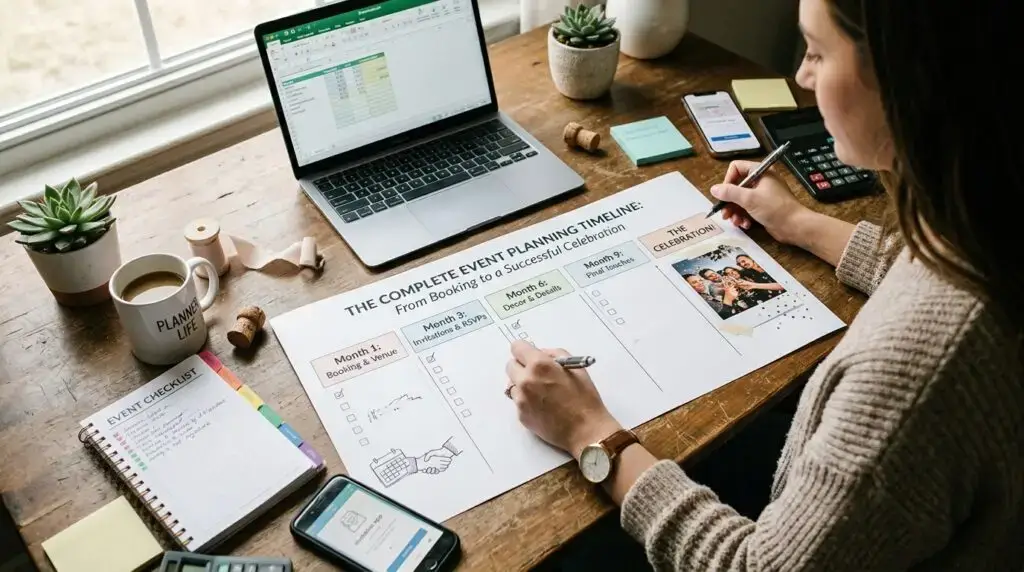
Whether you’re organizing a wedding, corporate conference, fundraising gala, birthday party, anniversary celebration, or community event, a structured event planning timeline is one of the most valuable tools for staying organized.
A successful event doesn’t happen because everything goes perfectly on the day itself. It succeeds because dozens of decisions are made weeks or months in advance. From establishing goals and setting a budget to booking vendors, managing guest communication, coordinating logistics, and preparing contingency plans, every stage plays an important role.
This guide provides a practical step-by-step timeline that helps organizers confidently move from the initial planning phase to a successful event while avoiding common mistakes, managing budgets effectively, and creating memorable guest experiences.
What is an event planning timeline?
An event planning timeline is a structured schedule that outlines every major task required before, during, and after an event. It helps organizers prioritize deadlines, coordinate vendors, manage budgets, communicate with guests, and execute the event efficiently while reducing last-minute stress.
Why Every Successful Event Starts With a Timeline
No matter how simple or elaborate an event may seem, every successful celebration relies on hundreds of small decisions working together.
Without a clear plan, important details can easily be overlooked, leading to scheduling conflicts, budget overruns, communication issues, or unnecessary stress as the event approaches.
A structured timeline transforms a complex planning process into manageable steps by assigning priorities and deadlines long before the event day arrives.
An organized timeline helps you:
- Stay ahead of important deadlines
- Keep vendors aligned
- Manage your budget more effectively
- Reduce planning stress
- Improve communication
- Prepare for unexpected situations
- Deliver a better guest experience
- Track planning progress with confidence
Professional event planners rarely rely on memory alone. Instead, they follow detailed timelines that allow every member of the planning team to understand what needs to happen and when.
Event Planning Timeline at a Glance
| Time Before Event | Primary Focus |
|---|---|
| 12–18 Months | Vision, goals, budget, venue research |
| 10–12 Months | Venue booking and major vendors |
| 8–10 Months | Catering, entertainment, photography |
| 6–8 Months | Event design, branding, logistics |
| 4–6 Months | Guest communication and registrations |
| 3–4 Months | Contracts, layouts, technical planning |
| 2–3 Months | Invitations and attendance management |
| 1–2 Months | Final confirmations |
| 2–4 Weeks | Master event timeline |
| Event Week | Final checks |
| Event Day | Execution |
| After Event | Evaluation and follow-up |
12–18 Months Before the Event: Build Your Foundation
For weddings, conferences, galas, and other large-scale events, planning should begin well in advance. The earlier you define your goals, the easier every future decision becomes.
Step 1: Define Your Event Objectives
Every successful event starts with a clear purpose.
Ask yourself:
- Why are you organizing this event?
- Who is your target audience?
- What experience should guests remember?
- What outcome defines success?
- What message should the event communicate?
The answers influence everything from venue selection to entertainment and guest engagement.
Event Goal Examples
| Event Type | Primary Objective |
|---|---|
| Wedding | Celebrate with family and friends |
| Corporate Conference | Education and networking |
| Fundraising Gala | Raise awareness and donations |
| Birthday Celebration | Personal milestone |
| Community Festival | Entertainment and engagement |
| Awards Ceremony | Recognition and appreciation |
Step 2: Establish Your Event Budget
Budget planning is one of the most critical early decisions because nearly every other choice depends on it.
Instead of focusing only on major expenses, build a comprehensive budget that includes expected and unexpected costs.
Event Budget Categories
- Venue Rental
- Catering
- Entertainment
- Decorations
- Floral Design
- Photography & Videography
- Audio-Visual Equipment
- Event Staffing
- Invitations
- Transportation
- Marketing (for public events)
- Insurance
- Contingency Fund
Sample Budget Allocation
| Category | Recommended Allocation |
|---|---|
| Venue & Catering | 40–50% |
| Entertainment | 10–15% |
| Photography & Video | 8–12% |
| Décor | 8–10% |
| Marketing & Invitations | 5–8% |
| Staffing | 5–8% |
| Miscellaneous & Contingency | Remaining Budget |
Expert Budget Tip: Reserve 5–10% of your budget as a contingency fund. Unexpected expenses are common, even with meticulous planning.
Step 3: Estimate Your Guest Count
Your guest list affects nearly every planning decision.
An accurate estimate helps determine:
- Venue size
- Catering quantities
- Seating arrangements
- Staffing requirements
- Parking needs
- Registration systems
- Budget expectations
Even if your list changes later, establishing an early estimate provides a strong planning foundation.
Guest Count Planning Guide
| Guests | Event Size |
|---|---|
| Under 50 | Small |
| 50–100 | Medium |
| 100–250 | Large |
| 250–500 | Major Event |
| 500+ | Large-Scale Production |
Step 4: Choose Your Preferred Event Date
Selecting a date involves more than checking calendars.
Consider:
- Seasonal weather
- Local holidays
- School schedules
- Industry conferences
- Community events
- Peak travel periods
- Vendor availability
Choosing the right date early improves venue options and vendor availability.
Peak Season vs Off-Season Events
| Peak Season | Off-Season |
|---|---|
| Greater demand | Better availability |
| Higher pricing | More flexible pricing |
| Limited vendor availability | Easier scheduling |
| Earlier booking required | More date options |
Step 5: Build Your Planning Team
Even smaller events benefit from clearly assigned responsibilities.
Your planning team may include:
- Event Planner
- Venue Coordinator
- Catering Manager
- Entertainment Coordinator
- Volunteer Coordinator
- Registration Manager
- Technical Support
- Marketing Lead
- Sponsorship Manager
Assigning responsibilities early prevents confusion later.
Event Responsibility Matrix
| Task | Responsible Person |
|---|---|
| Budget | Event Manager |
| Venue | Venue Coordinator |
| Vendors | Event Planner |
| Catering | Catering Manager |
| Guest List | Registration Lead |
| Marketing | Communications Team |
| Photography | Media Coordinator |
Professional Planner Insight
One of the biggest reasons events experience delays isn’t because people work too slowly. It’s because responsibilities aren’t clearly assigned. Every major task should have a single owner who is accountable for deadlines, communication, and follow-up.
Featured Snippet
Why is an event planning timeline important?
An event planning timeline keeps organizers on schedule by outlining every task from budgeting and venue booking to vendor coordination, guest communication, and event-day execution. It helps reduce stress, improve organization, avoid missed deadlines, and create a better overall experience for attendees.
Common Planning Mistakes During the First Phase
Avoid these early planning errors:
❌ Starting without a defined objective.
❌ Underestimating the total budget.
❌ Booking a venue before estimating guest count.
❌ Ignoring seasonal availability.
❌ Failing to assign planning responsibilities.
❌ Not creating a written timeline.
Expert Advice
The first few months of planning determine how smooth the rest of the process will be. Spending extra time defining goals, estimating budgets, and building a realistic timeline often prevents dozens of avoidable problems later.
Think of this stage as creating the blueprint for your entire event. A strong foundation makes every decision that follows more organized, efficient, and enjoyable.
10–12 Months Before the Event: Secure the Foundation
Once you’ve established your vision, budget, and estimated guest count, it’s time to begin making the biggest decisions that will shape your event.
This stage focuses on securing the venue and booking the vendors that are most likely to sell out early.
Whether you’re planning a wedding, corporate conference, gala, or private celebration, the earlier these decisions are finalized, the smoother the remainder of your planning process becomes.
Step 6: Choose the Right Venue
Your venue determines far more than where guests will gather.
It influences:
- Event flow
- Guest capacity
- Catering options
- Vendor flexibility
- Parking
- Accessibility
- Photography opportunities
- Overall guest experience
Choosing the right venue early allows other planning decisions to fall into place naturally.
Venue Selection Checklist
When comparing venues, evaluate:
✔ Guest Capacity
✔ Location
✔ Parking Availability
✔ Accessibility
✔ Indoor & Outdoor Spaces
✔ Weather Backup Plan
✔ Catering Policies
✔ Audio-Visual Capabilities
✔ Setup & Cleanup Time
✔ Vendor Flexibility
✔ Bridal/VIP Suites
✔ Budget Compatibility
Venue Comparison Matrix
| Feature | Excellent Venue | Average Venue |
|---|---|---|
| Flexible Layout | ✅ | Limited |
| Parking | Ample | Limited |
| Accessibility | Fully Accessible | Partial |
| Vendor Flexibility | High | Restricted |
| Weather Backup | Included | Additional Fee |
| Event Coordinator | Included | Optional |
| AV Equipment | Included | Rental Required |
Planner’s Insight
Many organizers focus primarily on appearance, but experienced planners prioritize functionality. A venue that supports efficient logistics, guest comfort, and vendor coordination often creates a far better event experience than one chosen solely for aesthetics.
Step 7: Book Your Venue
Popular venues often reserve dates 12 to 18 months in advance.
Before signing a contract, confirm:
- Deposit requirements
- Cancellation policy
- Payment schedule
- Overtime fees
- Setup access
- Vendor access
- Insurance requirements
- Included amenities
Request everything in writing to avoid misunderstandings later.
Event Venue Red Flags 🚩
Be cautious if a venue:
- Avoids discussing pricing transparently
- Has vague contracts
- Doesn’t provide written policies
- Limits communication
- Lacks contingency plans
- Has poor online reviews
- Doesn’t assign an event coordinator
Step 8: Build Your Vendor Booking Timeline
Not every vendor needs to be booked at the same time.
Prioritize vendors based on availability and importance.
Vendor Booking Priority Matrix
| Vendor | Booking Priority |
|---|---|
| Venue | Immediate |
| Caterer | Immediate |
| Photographer | High |
| Videographer | High |
| Entertainment | High |
| Planner | High |
| Florist | Medium |
| Rentals | Medium |
| Transportation | Medium |
| Bakery | Medium |
| Photo Booth | Lower |
| Specialty Entertainment | Lower |
Why This Matters
Professional photographers, caterers, and entertainment providers often book months or even years ahead.
Delaying these bookings can significantly reduce your available options.
Step 9: Hire an Event Planner (If Needed)
Professional planners save time by managing logistics, communication, and scheduling while helping reduce stress throughout the planning process.
Event Planner Responsibilities
- Timeline creation
- Vendor coordination
- Budget tracking
- Guest logistics
- Event design
- Scheduling
- Problem solving
- Day-of management
Planner vs Coordinator
| Event Planner | Day-of Coordinator |
|---|---|
| Manages full planning process | Oversees event day |
| Vendor selection | Vendor coordination |
| Budget management | Timeline execution |
| Design assistance | Guest flow |
| Long-term planning | On-site logistics |
Expert Tip
Even experienced organizers benefit from hiring at least a day-of coordinator to manage logistics while allowing hosts to focus on guests.
Step 10: Secure Catering
Food consistently ranks among the most memorable aspects of any event.
Begin discussing catering immediately after booking your venue.
Catering Planning Checklist
✔ Dietary Restrictions
✔ Beverage Packages
✔ Dessert Options
✔ Staffing
✔ Equipment
✔ Tastings
✔ Service Timeline
✔ Cleanup
Catering Service Comparison
| Service Style | Best For |
|---|---|
| Buffet | Large Casual Events |
| Plated Dinner | Formal Events |
| Family Style | Weddings |
| Food Stations | Modern Celebrations |
| Cocktail Reception | Networking Events |
Planner’s Recommendation
Choose a catering style that supports your event objectives rather than simply following trends.
A networking event benefits from food stations, while an awards banquet may require formal plated service.
Step 11: Book Photography & Videography
Professional media preserves important moments while also creating valuable promotional content for businesses and organizations.
Questions to Ask
- How many hours are included?
- Will there be multiple photographers?
- When will images be delivered?
- Is drone coverage available?
- What backup equipment is carried?
- How are files stored?
Photography Timeline
| Time | Coverage |
|---|---|
| Setup | Venue preparation |
| Guest Arrival | Registration & networking |
| Main Event | Key presentations |
| Entertainment | Performances |
| Closing | Group photos |
Step 12: Entertainment Planning
Entertainment influences guest energy throughout the event.
Examples include:
- DJs
- Live Bands
- Speakers
- Comedians
- Cultural Performers
- Award Hosts
- Interactive Experiences
Entertainment Selection Guide
| Event Type | Recommended Entertainment |
|---|---|
| Wedding | DJ + Live Music |
| Corporate | Speaker + DJ |
| Gala | Live Band |
| Birthday | DJ |
| Charity Event | Emcee + Entertainment |
Step 13: Technology Planning
Technology often receives less attention than décor, yet it has a major impact on the success of presentations and guest experiences.
Technology Checklist
✔ Microphones
✔ Speakers
✔ Lighting
✔ Projectors
✔ Screens
✔ Wi-Fi
✔ Charging Stations
✔ Livestream Equipment
✔ Presentation Clickers
✔ Extension Cords
✔ Backup Batteries
AV Planning Matrix
| Equipment | Required For |
|---|---|
| Wireless Microphones | Speeches |
| Projector | Conferences |
| LED Screens | Large Events |
| Sound System | All Events |
| Stage Lighting | Entertainment |
| Livestream Setup | Hybrid Events |
Expert Insight
Always schedule a full AV test before the event begins.
Even premium equipment can fail if not tested under real event conditions.
Step 14: Vendor Communication System
One of the biggest differences between average events and exceptional events is communication.
Every vendor should know:
- Arrival Time
- Contact Person
- Parking Instructions
- Setup Location
- Power Requirements
- Event Timeline
- Emergency Contact
Vendor Communication Checklist
✔ Contact Sheet
✔ Arrival Schedule
✔ Venue Map
✔ Parking Instructions
✔ Emergency Numbers
✔ Timeline
✔ Payment Status
✔ Equipment Needs
Featured Snippet
What should be booked first when planning an event?
The venue should be booked first because it determines the event date, guest capacity, layout, and vendor availability. Once the venue is secured, organizers should prioritize booking caterers, photographers, entertainment providers, and event planners, as these professionals often have limited availability during peak seasons.
Common Mistakes During This Phase
Avoid these planning mistakes:
❌ Waiting too long to book vendors.
❌ Choosing vendors before confirming the venue.
❌ Comparing vendors based only on price.
❌ Ignoring online reviews and references.
❌ Failing to schedule tastings or consultations.
❌ Not confirming insurance requirements.
❌ Overlooking technology needs.
Professional Planner Advice
Think of your venue and vendors as one integrated team rather than separate businesses. The best events happen when caterers, photographers, entertainers, venue staff, and coordinators understand the same timeline, communicate effectively, and work toward a shared goal of delivering an exceptional guest experience.
6–8 Months Before the Event: Transform Your Vision Into a Complete Experience
With your venue, major vendors, and core logistics secured, this phase shifts from planning the foundation to crafting the actual guest experience.
Instead of simply checking items off a list, begin asking:
- What will guests remember?
- How will attendees move through the event?
- Does every element support the event’s purpose?
- Are all vendors working toward the same vision?
This is where successful events begin to feel intentional rather than simply organized.
Step 15: Develop Your Event Theme & Brand Identity
Whether you’re hosting a wedding, gala, conference, fundraiser, or milestone celebration, consistency creates a stronger impression.
Your event should have a recognizable identity that ties every element together.
Your Event Identity Should Include
✔ Color Palette
✔ Typography
✔ Floral Style
✔ Lighting Design
✔ Table Décor
✔ Signage
✔ Welcome Displays
✔ Stage Design
✔ Guest Gifts
✔ Dress Code (if applicable)
Event Style Comparison
| Event Type | Design Style |
|---|---|
| Luxury Wedding | Elegant & Timeless |
| Corporate Conference | Modern & Professional |
| Fundraising Gala | Sophisticated |
| Community Festival | Bright & Interactive |
| Birthday Celebration | Personalized & Fun |
Planner’s Insight
Guests rarely remember every decoration individually.
They remember how the event felt.
Consistency creates that emotional connection.
Step 16: Finalize Event Layout & Floor Plan
A beautiful venue can still feel disorganized if guests don’t know where to go.
An effective floor plan improves:
- Guest movement
- Registration efficiency
- Food service
- Networking
- Photography
- Emergency access
Floor Plan Checklist
Include designated space for:
- Registration
- Welcome Area
- Cocktail Hour
- Dining Tables
- Stage
- Dance Floor
- Dessert Station
- Bar
- Lounge Area
- Vendor Stations
- Restrooms
- Emergency Exits
Guest Flow Example
Arrival

↓

Registration

↓

Welcome Drinks

↓

Main Event

↓

Dinner

↓

Entertainment

↓

Dessert

↓

Closing

↓

Departure
A logical guest journey reduces congestion and keeps the event running smoothly.
Step 17: Guest Communication Strategy
One of the easiest ways to improve guest satisfaction is through proactive communication.
Guests should never wonder:
- Where do I park?
- What time should I arrive?
- What’s the dress code?
- Where is the entrance?
- Is transportation available?
Answer these questions before they’re asked.
Communication Timeline
| Timeline | Communication |
|---|---|
| 6 Months | Save the Date |
| 3 Months | Invitations |
| 1 Month | RSVP Reminder |
| 2 Weeks | Event Details |
| 3 Days | Final Reminder |
| Event Day | Welcome Message |
Essential Guest Information
Every communication should include:
✔ Date
✔ Time
✔ Venue Address
✔ Parking Instructions
✔ Dress Code
✔ Contact Number
✔ Schedule Highlights
✔ Weather Information (Outdoor Events)
✔ Accessibility Information
Expert Tip
A reminder email or text message sent 48 to 72 hours before the event significantly reduces late arrivals and last-minute questions.
Step 18: Registration & RSVP Management
As responses begin arriving, transition from estimating attendance to managing confirmed guests.
Registration Checklist
Track:
- Confirmed Guests
- Dietary Restrictions
- Accessibility Requests
- VIP Guests
- Children
- Special Seating Needs
- Transportation Requests
RSVP Dashboard Example
| Category | Count |
|---|---|
| Invited | 250 |
| Confirmed | 185 |
| Pending | 40 |
| Declined | 25 |
Keeping this information updated allows vendors to prepare accurately.
Step 19: Seating Plan & Guest Experience
Thoughtful seating arrangements encourage conversation and reduce awkward situations.
Seating Best Practices
✔ Keep families together.
✔ Seat elderly guests away from loud speakers.
✔ Provide easy access for guests with mobility needs.
✔ Position VIPs near the main stage or dance floor.
✔ Separate service pathways from guest seating.
Seating Mistakes to Avoid
❌ Blocking exits.
❌ Overcrowding tables.
❌ Placing children far from parents.
❌ Ignoring accessibility needs.
❌ Forgetting vendor seating.
Step 20: Transportation & Parking Planning
Transportation is often overlooked until the final weeks.
Planning early improves punctuality and guest satisfaction.
Transportation Checklist
- Parking Capacity
- Overflow Parking
- Valet Service
- Shuttle Service
- Ride Share Pickup Area
- Hotel Transportation
- Vendor Parking
- Accessible Parking
Transportation Matrix
| Guest Type | Recommendation |
|---|---|
| Local Guests | Self Parking |
| Hotel Guests | Shuttle |
| VIP Guests | Reserved Parking |
| Elderly Guests | Closest Parking |
| Vendors | Dedicated Loading Area |
step 21: Risk Management & Emergency Planning
Professional planners prepare for unexpected situations before they occur.
Emergency Planning Checklist
✔ Severe Weather
✔ Medical Emergencies
✔ Vendor Delays
✔ Power Outages
✔ Internet Failure
✔ Equipment Malfunctions
✔ Traffic Delays
✔ Emergency Contacts
Event Risk Assessment
| Risk | Preparation |
|---|---|
| Rain | Indoor Backup |
| Power Failure | Generator |
| Vendor Delay | Backup Timeline |
| Medical Issue | First Aid Kit & Emergency Contacts |
| Traffic | Earlier Vendor Arrival |
Planner’s Advice
Emergency planning isn’t pessimistic.
It’s professional.
The goal is to ensure guests never notice when something unexpected happens.
Step 22: Build Your Event-Day Command Center
Every successful event has one central location where information is organized.
Include
- Vendor Contacts
- Timeline
- Venue Maps
- Guest List
- Seating Chart
- Emergency Contacts
- Payment Receipts
- Event Schedule
- Backup Plans
Whether it’s a printed binder or a shared digital folder, having everything in one place saves valuable time during the event.
Step 23: Create the Master Event Timeline
By now, every vendor should be working from the same detailed schedule.
Sample Master Timeline
| Time | Activity |
|---|---|
| 8:00 AM | Venue Opens |
| 9:00 AM | Vendors Arrive |
| 11:00 AM | Décor Complete |
| 12:00 PM | Catering Setup |
| 1:00 PM | AV Testing |
| 2:00 PM | Staff Briefing |
| 3:00 PM | Guest Registration Opens |
| 4:00 PM | Event Begins |
| 6:00 PM | Dinner Service |
| 7:30 PM | Entertainment |
| 9:30 PM | Closing Remarks |
| 10:00 PM | Breakdown Begins |
Event-Day Success Formula
Professional planners often follow this simple formula:
Preparation

+

Communication

+

Coordination

+

Flexibility

=

Successful Event
Every stage supports the next. Skipping one often creates unnecessary challenges later.
Featured Snippet
How do professional event planners stay organized?
Professional event planners use detailed timelines, centralized planning documents, vendor communication schedules, floor plans, guest management systems, and contingency plans to coordinate every stage of an event. These tools help ensure vendors stay aligned, guests have a seamless experience, and unexpected issues can be resolved quickly.
Common Mistakes During This Phase
Avoid these frequent planning errors:
❌ Waiting too long to send invitations.
❌ Not updating the guest list regularly.
❌ Forgetting accessibility accommodations.
❌ Creating confusing venue layouts.
❌ Failing to communicate timeline updates with vendors.
❌ Skipping a final logistics review.
❌ Assuming every vendor has the latest event schedule.
Professional Event Planner Insight
Successful events are rarely remembered because every detail was extravagant.
They’re remembered because everything felt effortless.
Guests arrived without confusion, moved naturally through each stage of the event, enjoyed seamless service, and left feeling that every detail had been thoughtfully planned.
That level of execution isn’t achieved through luck. It’s the result of careful preparation, clear communication, and disciplined timeline management.
Quick Summary
Planning a successful event requires more than booking a venue and hiring vendors. A structured event planning timeline helps you organize every stage, from defining your objectives and securing key services to managing guest communication, coordinating logistics, and evaluating the event afterward.
Whether you’re organizing a wedding, corporate conference, fundraising gala, birthday celebration, anniversary, or private event, following a detailed timeline reduces stress, improves efficiency, and creates a memorable experience for every attendee.
Key Takeaways
✔ Begin planning major events 12–18 months in advance whenever possible.
✔ Book your venue before hiring most vendors.
✔ Assign clear responsibilities to your planning team.
✔ Build a detailed master timeline for vendors and staff.
✔ Communicate consistently with guests throughout the planning process.
✔ Prepare contingency plans for weather, technical issues, and emergencies.
✔ Evaluate the event afterward to improve future planning.
Ultimate Event Planning Checklist
Planning Phase
☐ Define event objectives
☐ Establish budget
☐ Estimate guest count
☐ Choose preferred date
☐ Build planning team
☐ Create master timeline
Venue & Vendors
☐ Book venue
☐ Reserve caterer
☐ Hire photographer
☐ Book entertainment
☐ Confirm rentals
☐ Schedule tastings
☐ Review contracts
Guest Management
☐ Save the Dates
☐ Invitations
☐ Registration System
☐ RSVP Tracking
☐ Seating Plan
☐ Accessibility Requests
☐ VIP Planning
Logistics
☐ Parking Plan
☐ Transportation
☐ Vendor Schedule
☐ Equipment Testing
☐ Emergency Plan
☐ Event Materials
☐ Staff Briefing
Event Day
☐ Setup
☐ Vendor Check-In
☐ Registration
☐ Guest Assistance
☐ Timeline Monitoring
☐ Breakdown
Post Event
☐ Vendor Follow-Up
☐ Budget Review
☐ Survey Guests
☐ Thank You Messages
☐ Team Debrief
Event Timeline Worksheet
| Timeline | Primary Focus |
|---|---|
| 18–12 Months | Vision, Budget, Venue |
| 12–10 Months | Major Vendors |
| 10–8 Months | Catering & Entertainment |
| 8–6 Months | Design & Branding |
| 6–4 Months | Guest Communication |
| 4–2 Months | Logistics |
| 2 Months | Final Confirmations |
| Event Week | Final Review |
| Event Day | Execution |
| After Event | Evaluation |
Vendor Confirmation Checklist
Before event week, confirm with every vendor:
✔ Arrival Time
✔ Contact Information
✔ Parking Instructions
✔ Setup Time
✔ Equipment Requirements
✔ Payment Status
✔ Emergency Contact
✔ Departure Schedule
✔ Backup Plan
✔ Timeline Copy Received
Event-Day Command Center Checklist
Create one master folder or binder containing:
- Event Timeline
- Guest List
- Seating Plan
- Venue Floor Plan
- Vendor Contacts
- Contracts
- Payment Receipts
- Emergency Contacts
- Insurance Documents
- Venue Rules
- Backup Timeline
Professional planners keep all essential documents in one location for quick access.
Post-Event Evaluation Framework
Great planners continue working after the guests leave.
Review the following:
Budget
- Was the budget accurate?
- Which expenses exceeded expectations?
- Where could savings be made?
Vendors
Evaluate:
- Communication
- Professionalism
- Timeliness
- Quality
- Guest Feedback
Guest Experience
Measure:
- Registration
- Food
- Entertainment
- Venue
- Flow
- Accessibility
Team Review
Ask:
- What worked well?
- What created delays?
- Which processes should improve next time?
Event Success Scorecard
| Area | Rating (1–5) |
|---|---|
| Venue | ⭐⭐⭐⭐⭐ |
| Catering | ⭐⭐⭐⭐⭐ |
| Guest Experience | ⭐⭐⭐⭐⭐ |
| Entertainment | ⭐⭐⭐⭐⭐ |
| Registration | ⭐⭐⭐⭐⭐ |
| Logistics | ⭐⭐⭐⭐⭐ |
| Communication | ⭐⭐⭐⭐⭐ |
| Timeline Management | ⭐⭐⭐⭐⭐ |
Common Event Planning Mistakes
Avoid these common mistakes:
🚫 Waiting too long to book the venue.
🚫 Underestimating the budget.
🚫 Poor vendor communication.
🚫 No contingency planning.
🚫 Ignoring accessibility.
🚫 Forgetting final walkthroughs.
🚫 Last-minute guest list changes without notifying vendors.
🚫 Not assigning responsibilities.
🚫 Skipping equipment testing.
🚫 No post-event evaluation.
Professional Event Planner Tips
Experienced planners recommend:
- Create deadlines earlier than necessary.
- Confirm every vendor at least one week before the event.
- Visit the venue multiple times.
- Walk through the event exactly as guests will experience it.
- Test microphones, lighting, and presentations before guests arrive.
- Keep printed copies of important documents even if everything is stored digitally.
- Assign one person to make final decisions on event day to avoid confusion.
FAQs
1. How far in advance should I start planning an event?
Large events generally benefit from 9–18 months of planning, while smaller private events may require only a few months.
2. What should I book first?
The venue should typically be your first booking because it determines the event date, capacity, and vendor availability.
3. Why is an event planning timeline important?
A structured timeline helps organizers stay on schedule, manage budgets, coordinate vendors, and reduce last-minute stress.
4. How can I stay organized during event planning?
Use detailed checklists, shared calendars, budgeting tools, vendor schedules, and a centralized planning document.
5. How much of the budget should go toward the venue?
Venue and catering often account for 40–60% of the total event budget, depending on the event type and location.
6. When should I hire vendors?
Major vendors such as caterers, photographers, and entertainers should be booked soon after securing the venue.
7. What information should invitations include?
Include the event date, time, venue address, RSVP instructions, dress code, parking details, and contact information.
8. How often should I communicate with guests?
Provide updates at key milestones, including save-the-date announcements, invitations, reminders, and final event instructions.
9. Why are venue walkthroughs important?
Walkthroughs help confirm layouts, logistics, vendor access, and setup plans before the event.
10. What should be included in a master event timeline?
Include vendor arrivals, setup, registration, presentations, meal service, entertainment, speeches, and cleanup.
11. Why should I have an emergency plan?
Unexpected weather, technical issues, traffic, or vendor delays can occur. Preparation minimizes disruption.
12. Should I assign responsibilities?
Yes. Clear ownership of each task improves accountability and coordination.
13. How can I avoid budget overruns?
Track expenses carefully, compare quotes, maintain a contingency fund, and review contracts before signing.
14. Why is guest experience so important?
Satisfied guests are more likely to remember the event positively and recommend future events.
15. What should I confirm one week before the event?
Reconfirm arrival times, contact information, payments, setup schedules, and equipment needs with every vendor.
16. How do I prepare for outdoor events?
Have a weather contingency plan, backup venue space, and clear communication procedures.
17. What technology should I test before the event?
Microphones, projectors, internet connections, presentation equipment, lighting, and audio systems should all be tested.
18. Why is post-event feedback valuable?
Feedback helps identify strengths, weaknesses, and opportunities for improving future events.
19. Should I hire an event planner?
Professional planners can simplify logistics, improve organization, and reduce stress, especially for larger events.
20. What makes an event successful?
Successful events combine thoughtful planning, strong communication, reliable vendors, clear timelines, and excellent guest experiences.
21. How do I choose the right event venue?
Evaluate capacity, location, accessibility, amenities, parking, vendor policies, pricing, and available support services.
22. What should be included in an event budget?
Include venue, catering, entertainment, décor, staffing, technology, transportation, marketing, insurance, and contingency funds.
23. Why is vendor communication important?
Consistent communication ensures everyone understands expectations, schedules, and responsibilities.
24. How can I reduce planning stress?
Start early, follow a structured timeline, delegate responsibilities, and confirm details well before the event.
25. What’s the biggest mistake event organizers make?
Trying to manage everything alone instead of building a reliable planning team and following a structured timeline.
What is the best event planning timeline?
The best event planning timeline begins 12 to 18 months before large events by defining goals, setting a budget, booking a venue, hiring vendors, managing guest communication, confirming logistics, preparing contingency plans, and evaluating the event afterward. Following a structured timeline helps reduce stress while improving organization and overall event success.
Contact Trio’s Banquet & Restaurant to check venue availability, discuss guest capacity, explore catering options, and begin planning your event in New Port Richey.