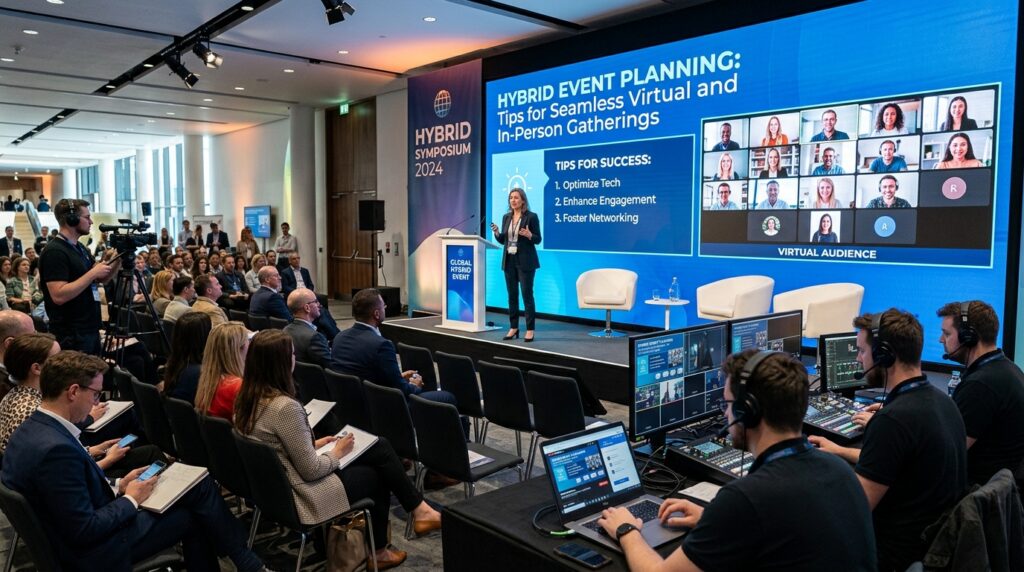
The event industry has evolved dramatically over the past few years, and hybrid events have become one of the most effective ways to connect with audiences. By combining in-person experiences with virtual participation, organizations can reach more attendees, increase engagement, and provide greater flexibility without sacrificing the personal connections that make events memorable.
From corporate conferences and training sessions to networking events and product launches, hybrid events are now a preferred choice for businesses of all sizes. However, successful hybrid events require thoughtful planning, reliable technology, and a strategy that delivers a seamless experience for both in-person and online attendees.
In this guide, we’ll explore essential hybrid event planning tips to help you create engaging, professional, and successful events that work equally well for virtual and on-site participants.
What Is a Hybrid Event?
A hybrid event combines a traditional in-person gathering with a virtual component that allows attendees to participate remotely.
Rather than choosing between a physical or online event, hybrid formats offer both options simultaneously.
Examples include:
● Corporate conferences
● Employee meetings
● Product launches
● Trade shows
● Educational seminars
● Fundraisers
● Networking events
● Award ceremonies
Attendees can either attend at the venue or join through a live-streaming platform from anywhere in the world.
Why Hybrid Events Continue to Grow
Organizations are embracing hybrid events because they provide several significant advantages.
Expanded Audience Reach
A physical venue has attendance limitations, but virtual access allows participants from different cities, states, or countries to join.
Increased Accessibility
Remote attendees can participate without travel expenses, making events more inclusive.
Better Return on Investment
Hybrid events often generate higher attendance rates and provide additional sponsorship opportunities through digital channels.
Valuable Data Collection
Virtual platforms provide analytics that help organizers understand attendee behavior, engagement levels, and content performance.
The Foundations of Successful Hybrid Event Planning
Effective hybrid events require more preparation than either traditional in-person events or fully virtual events.
The goal is to create one cohesive experience rather than two separate events happening simultaneously.
Let’s explore the most important hybrid event planning tips.
1. Start with Clear Event Objectives
Before selecting a venue or technology platform, define your goals.
Ask yourself:
● What is the purpose of the event?
● Who is the target audience?
● What outcomes do you want to achieve?
● How will success be measured?
Common objectives include:
● Lead generation
● Employee engagement
● Education and training
● Networking
● Brand awareness
● Revenue generation
Your goals will influence every decision throughout the planning process.
2. Choose the Right Venue
The venue plays a critical role in hybrid event success.
Unlike traditional events, hybrid gatherings require spaces that support both physical attendance and professional broadcasting.
Look for venues that offer:
Reliable High-Speed Internet
Strong internet connectivity is non-negotiable for live streaming and virtual participation.
Audio-Visual Capabilities
A venue should support:
● Professional microphones
● High-quality cameras
● Projectors and screens
● Lighting equipment
Flexible Event Layouts
The space should accommodate:
● Audience seating
● Speaker presentations
● Camera placements
● Production equipment
For organizations planning a hybrid corporate event Tampa, selecting a venue experienced with modern event technology can significantly reduce stress and improve execution.
3. Invest in Professional Streaming Technology
One of the biggest mistakes event organizers make is treating live streaming as an afterthought.
The virtual experience should feel just as polished as the in-person experience.
Essential technology includes:
● HD cameras
● Wireless microphones
● Video switchers
● Streaming software
● Backup internet connections
● Recording equipment
Professional production ensures remote attendees remain engaged and connected.
4. Create an Equal Experience for Both Audiences
A successful hybrid event doesn’t prioritize one audience over the other.
Both groups should feel equally valued.
Engage Virtual Attendees
Consider:
● Live chat features
● Interactive polls
● Q&A sessions
● Virtual networking opportunities
Engage In-Person Attendees
Provide:
● Interactive discussions
● Networking breaks
● Hands-on experiences
● Live demonstrations
The goal is to ensure neither audience feels like an afterthought.
5. Develop a Detailed Event Agenda
A structured schedule helps maintain engagement and keeps both audiences aligned.
When creating your agenda:
Keep Sessions Concise
Virtual attendees typically have shorter attention spans than in-person participants.
Aim for:
● 20–45 minute presentations
● Interactive breaks
● Frequent audience participation
Include Engagement Opportunities
Schedule:
● Live polls
● Panel discussions
● Audience Q&A
● Networking sessions
A dynamic agenda helps sustain interest throughout the event.
6. Prioritize Audience Interaction
Engagement is one of the most important elements of successful virtual event planning.
Without interaction, remote attendees can quickly lose focus.
Effective Engagement Strategies
● Live polling
● Audience questions
● Chat discussions
● Gamification
● Virtual breakout rooms
● Social media participation
Interactive elements help create a sense of involvement and community.
7. Train Speakers for Hybrid Presentations
Presenting to both in-person and virtual audiences requires a unique skill set.
Speakers should:
● Acknowledge both audiences regularly
● Look directly at cameras when appropriate
● Repeat audience questions
● Use clear and concise language
● Maintain energy throughout presentations
Speaker preparation significantly impacts attendee engagement.
8. Conduct Multiple Technical Rehearsals
Even the most experienced event teams perform rehearsals before a hybrid event.
Test:
● Internet connectivity
● Audio quality
● Camera angles
● Presentation slides
● Streaming platforms
● Audience interaction tools
Practice helps identify issues before attendees arrive.
Essential Live Stream Event Tips
Strong streaming quality can determine whether a hybrid event succeeds or fails.
Here are some critical live stream event tips:
Use Multiple Cameras
Multiple camera angles create a more dynamic viewing experience.
Examples include:
● Speaker close-ups
● Audience reactions
● Wide room shots
Prioritize Audio Quality
Attendees may forgive imperfect video, but poor audio often causes viewers to leave.
Invest in:
● Professional microphones
● Audio monitoring
● Sound checks
Have Backup Systems
Technical issues happen.
Prepare backup options for:
● Internet connections
● Audio equipment
● Presentation files
● Streaming platforms
Redundancy reduces risk and improves reliability.
Hybrid Corporate Event Tampa: Best Practices
Businesses throughout Tampa are increasingly adopting hybrid formats for conferences, meetings, and networking events.
When planning a hybrid corporate event Tampa, consider these additional best practices:
Focus on Professional Production
Corporate audiences expect polished presentations and seamless technology.
Encourage Networking
Provide opportunities for:
● Virtual networking rooms
● Live discussion groups
● Interactive sessions
Offer On-Demand Content
Recording sessions allows attendees to revisit presentations later and extends the event’s value.
Integrate Sponsorship Opportunities
Hybrid events create additional sponsor visibility through:
● Virtual booths
● Digital advertisements
● Sponsored sessions
● Branded content
Common Hybrid Event Challenges and Solutions
Challenge: Technical Failures
Solution
Use professional equipment, conduct rehearsals, and maintain backup systems.
Challenge: Low Virtual Engagement
Solution
Include interactive elements throughout the event rather than only at the beginning or end.
Challenge: Unequal Experiences
Solution
Design activities specifically for both audiences and ensure remote attendees can participate meaningfully.
Challenge: Speaker Inexperience
Solution
Provide training and practice sessions before the event.
Measuring Hybrid Event Success
Post-event analysis helps improve future events.
Key metrics include:
In-Person Metrics
● Attendance rates
● Session participation
● Networking activity
Virtual Metrics
● Live viewers
● Watch time
● Engagement rates
● Chat participation
Overall Metrics
● Lead generation
● Survey feedback
● Sponsor satisfaction
● Return on investment
Reviewing these metrics helps identify strengths and areas for improvement.
The Future of Hybrid Events
Hybrid events are no longer a temporary solution—they have become a permanent part of the event industry.
Future trends include:
● AI-powered networking
● Enhanced virtual reality experiences
● Interactive event apps
● Personalized attendee journeys
● Advanced event analytics
Organizations that embrace hybrid strategies today will be better positioned to meet evolving audience expectations tomorrow.
Conclusion
Hybrid events offer the best of both worlds by combining the energy and personal connection of in-person gatherings with the accessibility and reach of virtual participation. However, success requires careful preparation, thoughtful audience engagement, and reliable technology.
By following these hybrid event planning tips, investing in strong virtual event planning strategies, implementing professional live stream event tips, and selecting the right venue for your hybrid corporate event Tampa, you can create an experience that feels seamless for every attendee—regardless of how they choose to participate.
As the event landscape continues to evolve, hybrid events will remain a powerful tool for organizations looking to expand their reach, strengthen engagement, and deliver meaningful experiences that connect people both online and in person.
FAQ’S
Q: How can businesses ensure virtual attendees stay engaged during a hybrid event?
A: Keeping remote participants engaged requires more than simply live streaming the event. Interactive features such as live polls, Q&A sessions, chat discussions, virtual networking rooms, and breakout sessions help create a more immersive experience. By incorporating these engagement strategies, businesses can ensure virtual attendees remain active participants throughout the event rather than passive viewers.
Q: What venue features are most important when planning a hybrid corporate event in Tampa?
A: When organizing a hybrid corporate event Tampa businesses should prioritize venues with reliable high-speed internet, professional audio-visual capabilities, flexible room layouts, and adequate space for production equipment. A venue experienced in supporting hybrid events can help streamline operations and ensure both in-person and virtual attendees receive a seamless event experience.
Q: Why is professional streaming technology essential for hybrid event success?
A: Professional streaming technology helps create a high-quality experience for remote attendees. Equipment such as HD cameras, wireless microphones, video switchers, and backup internet connections ensures reliable broadcasts and clear communication. Investing in professional production allows organizations to deliver polished hybrid events that keep virtual participants connected and engaged from start to finish.
Q: What are the biggest challenges of hybrid event planning and how can they be solved?
A: Common hybrid event challenges include technical failures, low virtual engagement, unequal attendee experiences, and speaker inexperience. These issues can be addressed through technical rehearsals, interactive audience activities, balanced event design, and speaker training. Careful preparation helps organizations create a more reliable and enjoyable experience for all attendees.